Envío gratis en todos los pedidos superiores a $75 en los Estados Unidos

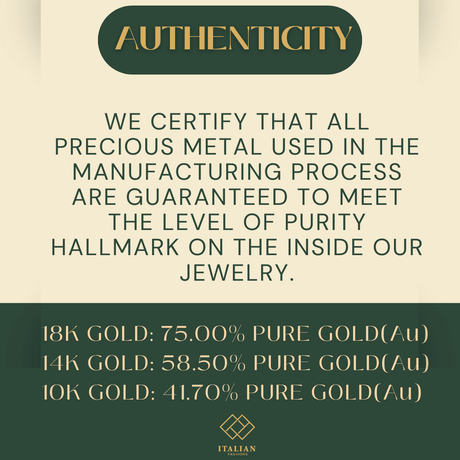
Cuando se trata de oro, garantizamos el uso de oro 100% real en todos nuestros productos de oro.

10K Gold Chains

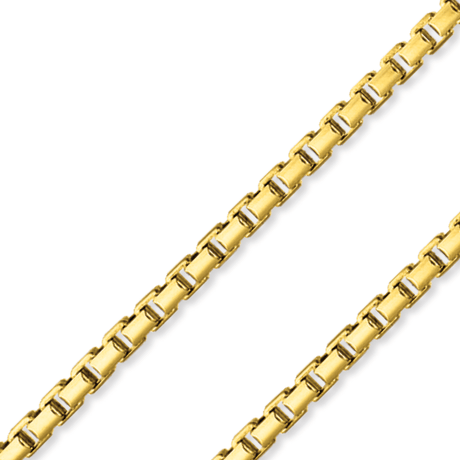
10K gold chains in yellow and white gold — real solid karat gold at the most accessible price. 41.7% pure gold, harder-wearing than higher karats, stamped 10K as a legal guarantee. Ships from the USA.

Ver como

Choosing a 10K Chain

Do the links on a 10K chain mark one another?

Every chain wears at its joints, because that is where metal moves against metal thousands of times a day, and no link style or construction avoids that entirely.

What it produces is a pair of bright polished bearing faces inside each link rather than visible scratching, along with a very gradual loss of material there.

An alloy carrying more of the other metals moves through that process more slowly, but no chain is exempt from it.

Does a paler yellow read differently in a wide chain?

Yes, and this is the most useful thing to know before choosing a width. Colour needs continuous surface to register.

A narrow chain shows the eye highlights and shadows, so alloys look alike; a wide flat link presents a face, and the hue becomes legible.

If the depth of the yellow matters to you, judge it at the width you actually intend to wear, and preferably in daylight rather than under shop lighting.

Should I choose a wider 10K chain over a narrower 14K one?

It depends on which quality you are buying the chain for. Width, link style and solid construction determine how a chain looks and how it survives being caught.

Depth of colour is what a higher karat gives, and on a fine chain that difference is difficult to see at all.

A useful way to decide is to look at both at the widths you are considering, in daylight, side by side.

Do I need to tell a jeweller my chain is 10K?

Yes, and it makes a practical difference. Solder is matched to the alloy for both colour and melting temperature, and the working margin is not large.

A bench that is unsure has to work conservatively, which usually means a slower job and sometimes a more visible join.

Mention the construction at the same time, since hollow links are formed from thin-walled tube and are heated quite differently from solid ones, and treating one as the other does damage.

Can a 10K chain be soldered to a clasp of another karat?

It can, and mixed-alloy joins are made routinely, but the jeweller needs to know both alloys before choosing a solder.

The join is made at the temperature the lower-melting of the two will tolerate, so the choice is constrained by the piece rather than by preference.

Colour is the visible consequence: a join between two different yellows may show slightly at the seam once it is polished.

Where does a 10K chain show wear first?

Inside the joints, where the links bear on one another, though what that produces is brightness at the bearing faces rather than anything a wearer would call damage.

The visible wear points are the clasp, the ring beside it, and wherever a pendant bail rides against the links.

Those are the places to look at when the chain is cleaned, because catching a thinning link early turns a replacement into a repair.

Does the link style matter more than the karat on a chain?

For how the chain looks, moves and drapes, yes. Link geometry decides whether a chain lies flat, rolls, catches light along its length or reads dense for its width.

The alloy decides the depth of the colour, and it affects how quickly the bearing surfaces inside the joints wear away, which is a slow process measured in years rather than months.

Most people notice the first of those daily and the second only after years, which is a reasonable guide to how to weight them.

Which part of a 10K chain does a jeweller check first?

The clasp and the jump ring immediately beside it, because that assembly carries the load every time the chain is put on and taken off.

After that, the links either side of any pendant, where a bail has spent years rubbing against the same two or three links rather than distributing the contact along the chain.

A quick look at those three points during cleaning catches the large majority of problems while they are still small.

Does a 10K chain need cleaning more often than a higher karat?

Not because of the alloy, but a chain of any kind collects more residue than a solid piece does, because it has a great many interior surfaces.

Soap, skin oils and lotion gather inside the links and dull the chain from within, which is why a chain can look tired while a pendant on it still looks bright.

Warm water, mild soap, a soft brush worked along the length and a thorough rinse and dry deal with it.

Can a jeweller add a link to lengthen a 10K chain?

Yes, provided the link style can be matched, which is straightforward on figaro, curb and rope patterns and considerably more awkward on anything unusual or long out of production.

The added metal should match the chain's alloy so that the new section does not read as a slightly different colour once polished.

Bring the chain rather than describing it, since the bench needs to see the link geometry and the construction to match it properly.

Links, Colour and the Bench

Comparar /3

Cargando...