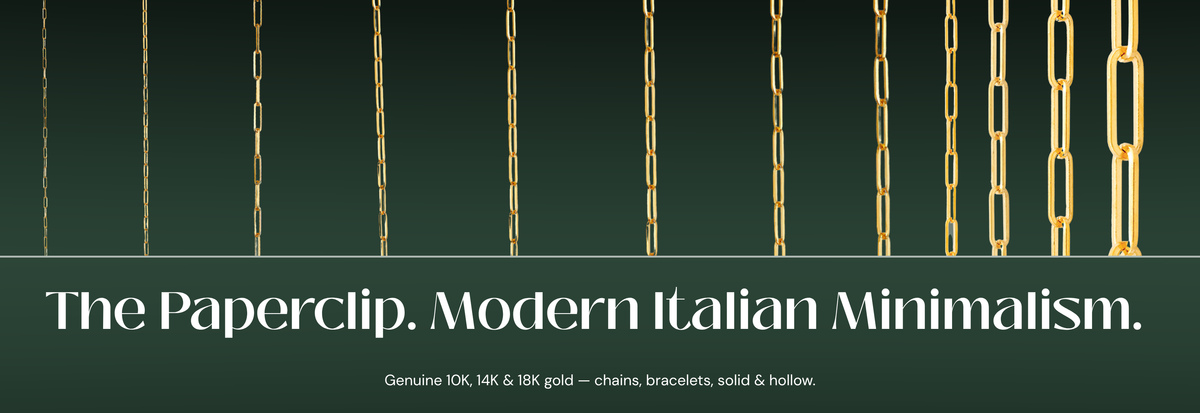
The paperclip chain's design references are exactly what the name suggests: elongated rectangular links with a clean, flat face — the same shape as the common office paperclip. The style became a serious fashion chain when designers began elevating industrial forms into fine jewelry, and the paperclip chain became the most successful of these translations because its proportions happen to work extremely well in gold: the elongated link is long enough to show karat color clearly, flat enough to lie perfectly against skin, and simple enough to complement rather than compete with other jewelry.
The flat, elongated link also reflects light in a distinct way from other chain styles. Unlike Cuban or rope chains that reflect from curved surfaces, the paperclip reflects from flat rectangular faces — light catches in panels that appear and disappear as the chain moves. At wider widths (5mm+), this creates a striking alternating-flash effect that round-link and spiral-link chains don't produce.
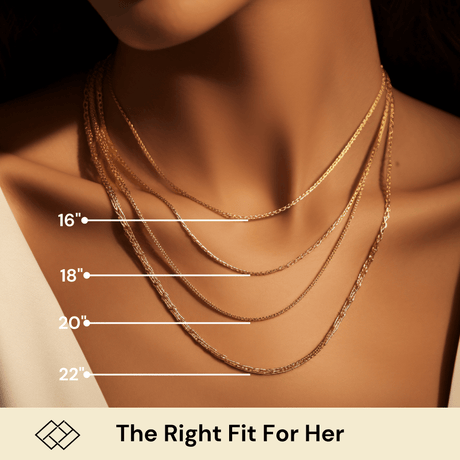
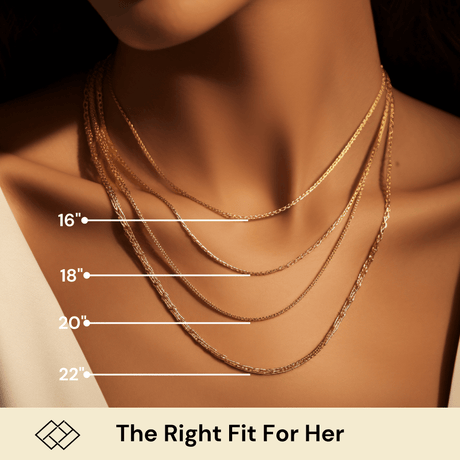
The paperclip chain has become the preferred choice for layering because its rectangular shape creates clear visual separation from round-link chains. A paperclip chain worn alongside a thin cable chain or a delicate rolo chain creates contrast in both shape and texture — the combination reads as intentional rather than accidental. This layering quality is one reason the paperclip became a defining chain style for women's fine jewelry.