Envío gratis en todos los pedidos superiores a $75 en los Estados Unidos

Cuando se trata de oro, garantizamos el uso de oro 100% real en todos nuestros productos de oro.

FLASH SALE— Save 25%

HAPPY25NOW
Italian 10K white gold Figaro chains with alternating links

Cadena Fígaro de oro blanco de 10 quilates

Cadena Fígaro de oro blanco de 10 quilates
Ver como

What is a 10K white gold figaro chain?

A 10K white gold figaro chain is the classic Italian alternating-link chain style -- one elongated oval link followed by two or three smaller round links -- manufactured from 10-karat white gold alloy. At 41.7% pure gold (10 parts out of 24), the 10K white gold alloy is combined with metals including palladium, silver, and/or nickel to produce a white-toned base metal, then finished with rhodium plating to achieve the bright, silver-white appearance consumers associate with white gold jewelry.

The figaro pattern in white gold creates a distinctive visual effect: the elongated links act as broad, flat reflective surfaces that catch and display the rhodium-plated white metal's brightness with exceptional clarity. In white gold, the figaro's link size variation -- long link vs. short links -- creates a play of light that reads as more geometric and structured than the constant sparkle of a rope chain or the uniform rhythm of a cable chain. The 10K karat level makes the white gold figaro accessible at a lower price point than 14K or 18K versions while retaining real gold content.

10K white gold figaro chains are available in widths from approximately 2mm to 10mm and standard lengths from 16 to 30 inches for necklaces. The style is equally popular for men and women -- thinner widths (2mm to 4mm) serve as refined women's chains or pendant carriers, while wider widths (5mm to 10mm) are suited to men's fashion-forward statement wear. The 10K karat designation and a hallmark stamp on the clasp are the identifiers of genuine 10K white gold figaro chains.

How is a 10K white gold figaro chain different from sterling silver?

A 10K white gold figaro chain and a sterling silver figaro chain look visually similar when new -- both display the classic figaro alternating-link pattern in a bright white metal tone. However, they are fundamentally different materials. Sterling silver is 92.5% pure silver with no gold content. A 10K white gold figaro chain is 41.7% pure gold -- a genuine gold alloy, categorized and valued as fine gold jewelry, even though its rhodium-plated surface appears similar to silver at a glance.

The practical differences between the two materials are significant for everyday wearers. Sterling silver tarnishes -- it reacts with sulfur compounds in air and skin oils to develop grey-to-black discoloration that requires regular polishing to address. A 10K white gold figaro chain does not tarnish in this way; the gold alloy base is chemically stable against the reactions that cause silver discoloration. White gold does experience rhodium plating wear over time, requiring periodic replating, but this is a different process from tarnish -- gradual surface dulling at wear points rather than reactive discoloration.

The value difference is also meaningful. Gold, even at 41.7% purity, carries substantially more intrinsic metal value per gram than silver. A 10K white gold figaro chain will typically cost several times more than a comparable sterling silver figaro chain of the same dimensions -- but it retains its intrinsic gold value over time in a way that silver cannot match. For buyers choosing between silver and 10K white gold figaro chains, the white gold option offers better long-term material value, lower tarnish maintenance demands, and genuine gold content.

What does 10K mean in 10K white gold?

The designation 10K in 10K white gold refers to the chain's gold purity -- specifically that 10 out of every 24 parts of the alloy are pure gold, equating to 41.7% gold content by weight. The karat system is a 24-part scale where 24K is 100% pure gold and lower karat numbers indicate progressively lower gold concentrations alloyed with other metals. In 10K white gold, the remaining 58.3% consists of metals chosen to create a white-toned base: typically palladium, silver, copper, and/or nickel.

The 10K karat level is the minimum gold purity legally permitted to be sold as gold jewelry in the United States. This distinguishes 10K white gold from gold-filled and gold-plated jewelry, where a non-gold base metal core is coated with a thin gold layer -- a 10K white gold figaro chain is a solid gold alloy throughout, with 41.7% gold content in every cross-section of every link. The same 10K purity applies whether the chain is yellow, rose, or white gold -- only the alloy metals and their proportions differ to produce the different color tones.

On a 10K white gold figaro chain, the karat is indicated by a hallmark stamp on or near the clasp. In the U.S., this stamp will read 10K or 10KT. On Italian-made chains and European jewelry, the numeric equivalent 417 (representing 41.7% gold content) may appear instead. Italian chains also carry a government assay mark from one of Italy's accredited assay offices, independently certifying the declared karat content -- an additional quality verification layer not present on most non-Italian chains.

Is 10K white gold real gold?

Yes -- 10K white gold is real gold. It is a gold alloy containing 41.7% pure gold by weight, which meets and exceeds the U.S. minimum threshold of 10 karats (41.7%) required for jewelry to legally be sold as gold in the United States. The white color comes from the alloy metals added to the pure gold -- typically palladium, silver, nickel, and/or copper in combinations that shift the alloy's natural yellow color toward white -- and the bright surface finish comes from rhodium plating applied over the white gold alloy base.

The distinction between real gold and gold-tone alternatives matters for buyers. Gold-plated, gold-filled, and gold-tone jewelry all use a non-gold base metal coated with a thin gold or gold-colored surface layer. A 10K white gold figaro chain is categorically different: it is a solid gold alloy throughout -- every link contains 41.7% gold in the metal itself, not just as a surface coating. This means the gold content is present even if surface finishes wear, and the chain retains intrinsic gold value that plated alternatives do not have.

For buyers who want real gold at an accessible price point, 10K white gold is the entry-level option in U.S. fine jewelry that provides genuine gold content. It costs more than silver, gold-filled, or gold-plated figaro chains, but it is genuinely different in material composition and long-term value. A 10K white gold figaro chain is appropriate for fine jewelry gifting, carries real gold value, and will be recognized as fine jewelry -- not fashion jewelry -- by jewelers and gold buyers assessing its metal content.

What are the hallmarks on a genuine 10K white gold figaro chain?

A genuine 10K white gold figaro chain carries specific hallmarks certifying its gold content. In the United States, the primary hallmark is the karat stamp: 10K, 10KT, or sometimes 10KP (plumb gold, a higher precision standard). This stamp is typically found on the clasp itself or on a small tag attached near the clasp. It certifies that the chain meets the 41.7% gold content standard required for 10K gold under U.S. trade standards. The stamp should be clearly legible under a loupe or magnifier -- if no hallmark is present, the gold content claim cannot be verified.

Italian-made 10K white gold figaro chains carry additional hallmarks required by Italian law. Beyond the karat stamp (417 in Italy's numeric system), Italian chains include a manufacturer's trademark -- a registered code identifying the specific Italian goldsmith or company -- and an assay office mark from one of Italy's government-accredited gold testing facilities. The assay mark is a geometric shape (star, shield, or other form depending on the assay region) containing a purity code. These marks appear together near the clasp and confirm that the declared karat has been independently tested and certified by a government-authorized body.

When purchasing a 10K white gold figaro chain, verify the hallmark with a loupe if possible -- karat stamps on clasp hardware can be small. On very thin chains, the stamp may appear on an attached tag rather than directly on the clasp mechanism. The presence of the karat stamp and, for Italian chains, the assay office mark and manufacturer code are the primary authenticity indicators. A reputable jeweler or fine chain retailer should be able to identify these marks and confirm their meaning. If purchasing second-hand, a licensed jeweler can test the metal with acid testing or electronic gold testing devices to verify karat.

What metals make up 10K white gold?

10K white gold is composed of 41.7% pure gold combined with 58.3% alloy metals selected to shift gold's natural yellow color toward white. The most common alloy metals in white gold formulations are palladium, silver, copper, nickel, and zinc. The specific combination and proportions vary by manufacturer and affect both the whiteness of the base alloy and its physical properties. Palladium-alloyed white gold produces a naturally whiter base with good malleability; nickel-alloyed white gold produces a harder, more affordable alloy but carries a higher risk of skin sensitivities in some wearers.

In practice, most 10K white gold figaro chains are alloyed with a combination of silver, copper, zinc, and either palladium or nickel in proportions that produce a workable alloy suitable for chain fabrication -- a process requiring the metal to be drawn into fine wire and formed into precise link shapes without cracking or deforming. The white gold base alloy is then rhodium-plated to produce the bright, highly reflective silver-white surface finish. Rhodium plating is standard on virtually all white gold jewelry sold in the U.S. market, regardless of the specific underlying alloy composition.

For buyers with known nickel sensitivities, it is worth confirming the alloy composition of a 10K white gold figaro chain before purchasing, as nickel is a common contact allergen. Palladium-alloyed or nickel-free 10K white gold is available and is the recommended choice for sensitive skin. Since the rhodium plating covers the base metal surface, direct skin contact with the alloy metals is minimized -- sensitivity reactions are most likely at areas of heavy wear where plating has thinned. Buying from a reputable jeweler who can specify the alloy composition is the best practice for buyers with metal sensitivities.

Does a 10K white gold figaro chain have rhodium plating?

Yes -- virtually all 10K white gold figaro chains sold in the U.S. fine jewelry market have rhodium plating applied over the white gold alloy base. Rhodium is a platinum-group metal that is significantly brighter, whiter, and harder than white gold alloys on their own. Even high-quality palladium-alloyed white gold has a slightly warm, off-white base color that benefits from rhodium's optical brightness. The rhodium coating is what gives white gold jewelry its characteristic bright, mirror-like silver-white surface finish.

The rhodium plating on a 10K white gold figaro chain is applied via electroplating -- a thin layer (typically 0.5 to 2.0 microns thick) of rhodium is deposited onto the polished white gold surface. The thickness of this layer affects how long the finish lasts before wearing through. Higher-quality rhodium applications (thicker plating) last longer before the underlying white gold base color begins to show at high-contact points. On a figaro chain, the clasp mechanism and the front center links experience the most friction and will typically show plating wear first.

When a 10K white gold figaro chain's rhodium plating wears through, the chain can be replated by a jeweler using the same electroplating process. Replating restores the chain's original bright white appearance and typically costs $25 to $75 depending on chain length and width. At 10K, the underlying alloy has a slightly more yellow-toned base than 14K or 18K (due to the lower gold content and higher alloy proportion), so the color shift when plating wears may be more noticeable than on higher-karat chains. Periodic replating is a standard part of the care cycle for any white gold chain, including 10K.

How durable is a 10K white gold figaro chain for everyday wear?

A 10K white gold figaro chain is more durable than higher-karat white gold alloys for everyday chain wear. The hardness of gold alloys increases as the gold percentage decreases -- pure gold (24K) is very soft and easily scratched, while the 41.7% gold in 10K white gold is alloyed with a significantly higher proportion of harder metals, producing a metal that is meaningfully more scratch-resistant than 14K or 18K white gold. For a figaro chain worn daily, this additional hardness translates to links that hold their shape and surface finish better under the friction of daily movement against skin and clothing.

The figaro chain construction -- flat, die-struck or stamped links -- benefits from this hardness in a specific way. The figaro's links are designed to be visually flat and broad, with the reflective surface quality central to the chain's appearance. Harder alloys maintain this flat surface quality better over time because they resist the micro-abrasions of daily contact that gradually dull softer metals. A 10K white gold figaro chain worn daily will show surface wear more slowly than a 14K version of the same chain due to this alloy hardness advantage.

The main durability consideration for 10K white gold figaro chains is construction quality rather than karat level. A well-constructed 10K figaro chain with properly closed links and a sturdy clasp will outlast a poorly constructed 14K chain. Key quality indicators are gram weight (heavier chains use thicker wire and are more durable), clasp quality (lobster-claw clasps are more secure than spring-ring clasps for daily wear), and link closure quality (no gaps in links that could catch and pull). Italian-made chains typically meet higher construction standards due to the manufacturing tradition and quality control practices of the Arezzo gold district.

Will a 10K white gold figaro chain tarnish?

A 10K white gold figaro chain will not tarnish in the way sterling silver tarnishes. Tarnish -- the grey-to-black discoloration caused by silver reacting with sulfur compounds in air and skin oils -- is a property of silver, not gold. The gold in a 10K white gold alloy is chemically inert and does not react with sulfur, oxygen, or common atmospheric chemicals to produce discoloration. This is one of the primary practical advantages of 10K white gold over sterling silver for figaro chain buyers who want a low-maintenance white metal chain.

What a 10K white gold figaro chain will experience over time is different from tarnish: the rhodium plating will gradually wear thin at high-contact points, revealing the slightly warmer-toned white gold alloy underneath. This is plating wear, not tarnish -- the base metal itself does not change color or react chemically. The process happens gradually and is most visible at the front center links and clasp area where the chain experiences the most friction. Replating by a jeweler restores the chain's original bright white finish completely, unlike tarnish which must be continuously polished.

Some 10K white gold alloys that include nickel can show a slightly yellowish or warm cast as plating wears in specific areas -- this is the base alloy color showing through, not oxidation or tarnish. The rate of plating wear depends on wear intensity, the thickness of the original rhodium application, and exposure to chemicals including chlorine, cleaning products, and cosmetics. Removing a 10K white gold figaro chain before swimming, showering, or applying lotions and perfumes will extend the life of the rhodium plating and keep the chain looking bright longer between replating intervals.

What is the gold content percentage in 10K white gold?

10K white gold contains 41.7% pure gold by weight -- the minimum gold purity permitted for jewelry to be sold as gold in the United States. This percentage is derived from the karat fraction: 10 karats out of a 24-karat scale equals 10 divided by 24, which is 41.666...%, conventionally stated as 41.7%. The remaining 58.3% of the alloy consists of other metals -- primarily palladium, silver, copper, nickel, or zinc in various combinations -- that give white gold its white color, workability for chain fabrication, and structural strength.

Comparing 10K to other karat levels shows what the gold content percentage means in practical terms. 14K white gold contains 58.5% pure gold (14/24), which is 16.8 percentage points more gold than 10K. 18K white gold contains 75% pure gold (18/24), which is 33.3 percentage points more than 10K. Each step up in karat represents a meaningful increase in gold content and therefore in intrinsic metal value. A 14K white gold figaro chain contains approximately 40% more pure gold by weight than a 10K chain of the same gram weight, which accounts for the price premium between the two karat levels.

The 41.7% gold content in 10K white gold makes it a genuine gold product throughout -- not gold-plated, gold-filled, or gold-tone. Every gram of a 10K white gold figaro chain contains 0.417 grams of pure gold. The current gold spot price can be used to calculate the approximate intrinsic gold value of any 10K chain: multiply the gram weight by 0.417 to get pure gold content in grams, then multiply by the current gold price per gram. This floor value is what the chain will be worth at minimum as a gold piece, independent of craftsmanship or retail premiums.

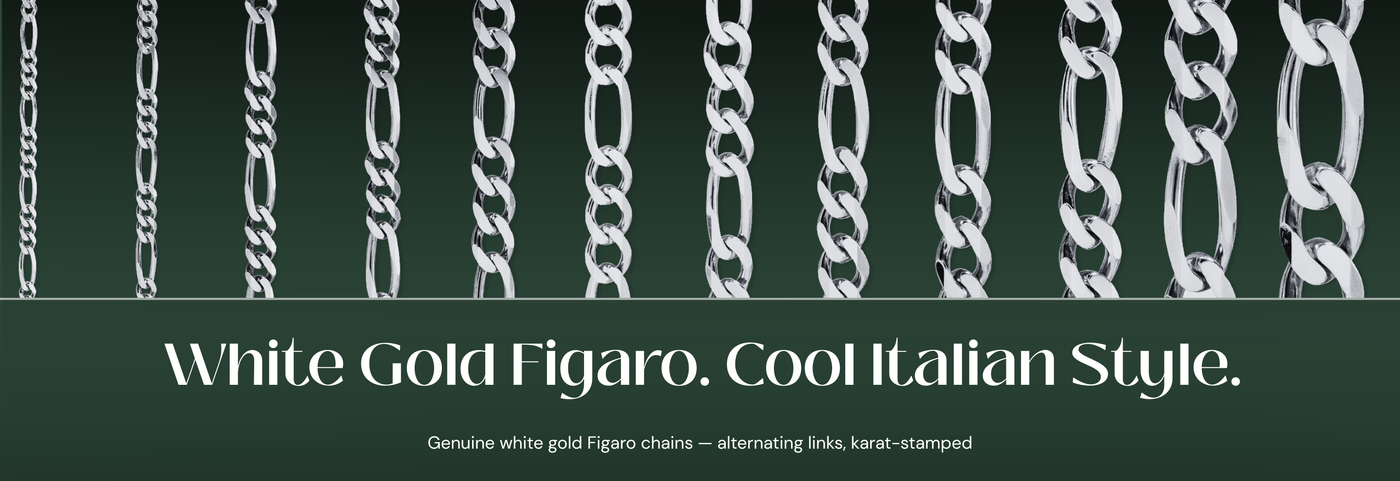
About 10K White Gold Figaro Chains

10K White Gold Figaro Chain: Italy's Pattern in the Hardest Standard White Gold

The 10K white gold Figaro chain combines the Italian alternating short-and-long link pattern with the hardest standard karat in a cool-toned metal. 10K's harder alloy keeps the Figaro's longer oval links precise at their attachment points longer under daily wear than softer 14K — and the white gold tone makes the alternating rhythm read as crisp and defined.

Figaro stress concentrates at the short-to-long link junctions where the longer links flex and transmit movement. 10K's alloy hardness at these junctions resists gradual deformation better than softer karats under daily wear without careful storage.

Effective from 2.5mm to 6mm at 16 to 24 inches. At 2.5mm to 3mm: pendant carriers. At 3.5mm to 5mm: versatile everyday chains. At 5mm to 6mm: clear statement. 10K makes this accessible as everyday fine white gold jewelry.

Comparar /3

Cargando...