Free shipping on all orders over $75 in the United States

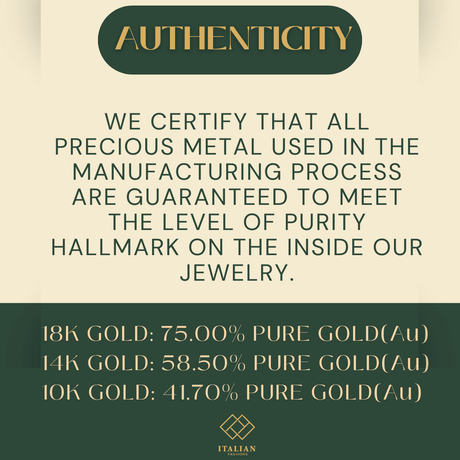
When it comes to gold, we guarantee the use of 100% real gold in all our gold products.

FLASH SALE— Save 25%

HAPPY25NOW
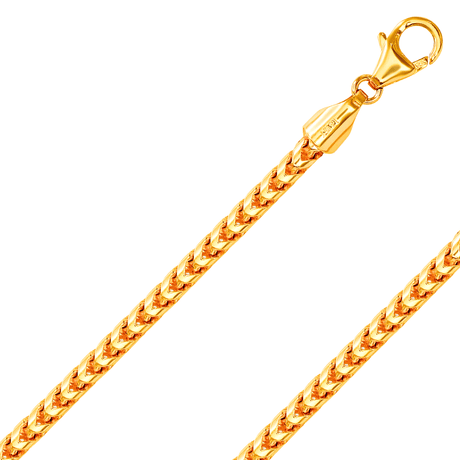
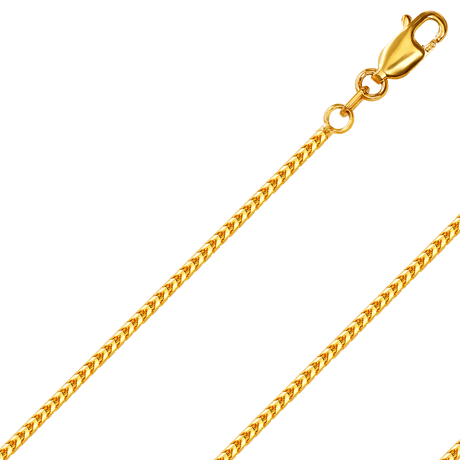
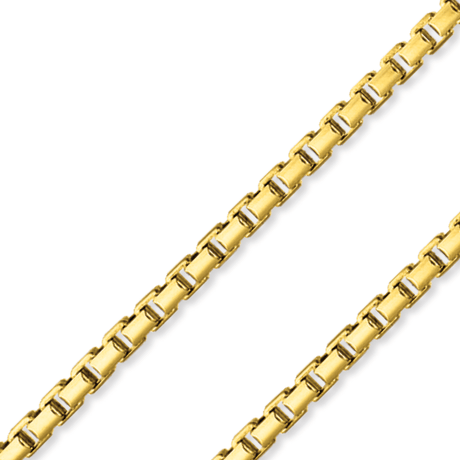
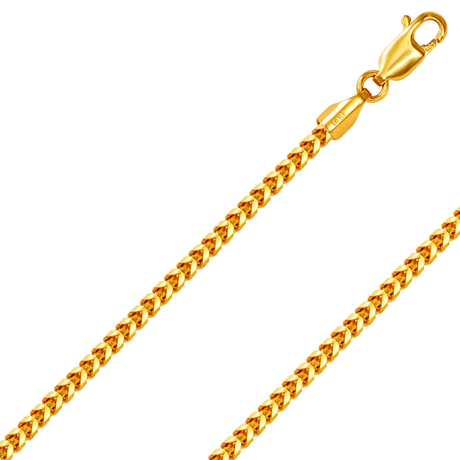
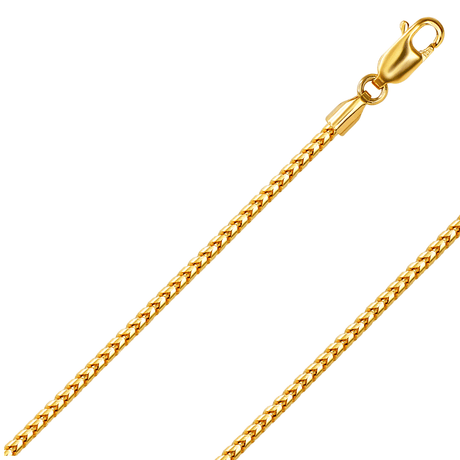
Italian 10K yellow gold chain

10K Yellow Gold Chain

10K Yellow Gold Chain: Italian Link Styles in the Hardest Standard Gold

A 10K yellow gold chain combines the durability advantage of 10K gold with the full range of Italian link styles. At 41.7% pure gold, 10K yellow gold is harder and more scratch-resistant than 14K or 18K, making it the karat of choice for chains worn daily through active lifestyles. The warm yellow color is slightly lighter than 14K, but reads unmistakably as gold and retains that color permanently without plating or treatment.

Why 10K Outperforms Higher Karats for Daily-Wear Chains

A chain that is worn and never removed accumulates stress at every link junction — from bending, from neck movement, from contact with clothing. 10K gold's higher alloy content makes it harder at those contact points, meaning the chain resists the fine surface abrasion that visibly dulls 14K chains over years of identical use. For buyers who want a chain that looks newer for longer without careful storage, 10K is the practical choice.

Selecting Style and Width in 10K Yellow Gold Chains

10K yellow gold chains are available in the same Italian link styles as 14K — Cuban, rope, Figaro, curb link, box, and others. Width selection follows identical principles: chains under 2.5mm serve as pendant carriers, 3mm to 5mm is the primary everyday statement range, and 6mm and above produces bold impact. The price-per-gram advantage of 10K over 14K means buyers can access larger widths and longer lengths at the same budget, getting more visual presence for the same spend.

View as

What is 10K yellow gold?

10K yellow gold is a gold alloy containing 41.7% pure gold combined with base metals — typically copper, silver, and zinc — that provide strength, hardness, and color stability. The 10K designation means 10 parts pure gold out of 24, making it the lowest karat grade legally sold as gold in the United States. Its warm, slightly muted yellow color and high durability make 10K yellow gold chain necklaces among the most popular and affordable fine gold chain options in the U.S. market.

The composition of 10K yellow gold varies slightly by manufacturer, but a typical formulation is 41.7% pure gold, 25–30% copper, 15–18% silver, and small amounts of zinc and nickel. Copper is the primary color and hardness contributor in yellow gold alloys — at higher copper proportions, the alloy takes on a warmer, richer yellow-orange tone. Silver lightens and cools the color, while zinc helps with casting and finishing. This combination produces a metal that is noticeably harder than 18K or 24K gold, making it well suited to chain-link constructions that experience regular mechanical stress.

10K yellow gold chain necklaces are an excellent choice for buyers who want genuine gold at an accessible price point. Because the gold content is lower than 14K or 18K, prices are lower per gram of finished chain. The trade-off is slightly less gold content per piece, but the durability advantage is real — 10K chains resist scratching and deformation better than higher-karat alternatives at the same link dimensions.

What does 10K mean on a gold chain?

10K means the chain contains 10 parts pure gold out of a total of 24 parts, equaling 41.7% pure gold content. The K stands for karat, the unit of gold purity measurement used in the United States and many other countries. A 10K stamp on a chain clasp is a legal declaration that the piece meets the minimum 10K gold content standard under U.S. Federal Trade Commission regulations.

The karat system divides gold purity into 24 equal parts. Pure gold is 24K (100% gold). 10K gold is 10 of those 24 parts: 10 ÷ 24 = 0.4167, or 41.7%. The remaining 58.3% consists of other metals selected to give the alloy its desired hardness, color, and workability. The 10K designation is the minimum karat grade permitted under FTC regulations for a piece to be sold as gold in the U.S. — anything below 10K cannot legally be described as gold jewelry.

When buying a 10K yellow gold chain, verify the karat stamp on the clasp before purchase. U.S.-made and imported chains sold as 10K must carry this stamp. Italian-manufactured chains additionally carry the European purity marking '417' (the decimal representation of 41.7%) alongside the manufacturer's code and Italian government assay mark. Either '10K' or '417' confirms you are purchasing a genuine 10K gold piece.

What color is 10K yellow gold?

10K yellow gold is a warm, medium-intensity yellow with a slightly muted tone compared to higher-karat golds. It is distinctly yellow — identifiable as gold at a glance — but lacks the deep, rich warmth of 18K or 22K yellow gold. The color is consistent and permanent; unlike white gold, it requires no plating to maintain its color.

The color of yellow gold alloys is primarily determined by the copper-to-silver ratio in the non-gold portion. In 10K yellow gold, the base metal portion (58.3% of the alloy) typically contains more copper than silver, which produces the warm yellow tone. At higher karat grades (18K, 22K), the gold content itself dominates the color, creating a richer, deeper yellow. At 10K, the base metals have more influence, producing a color that is yellow but slightly more orange-warm than premium karat yellows.

The color difference between 10K and 14K yellow gold is subtle and often difficult to perceive without direct side-by-side comparison. Many wearers prefer 10K yellow gold's slightly warmer tone over 14K's cooler yellow. The color is entirely natural and permanent — 10K yellow gold never needs replating and maintains its color through the lifetime of the piece with only routine cleaning.

Is 10K yellow gold real gold?

Yes. 10K yellow gold is real gold. It contains 41.7% pure gold — chemically identical to the gold in any other karat grade — alloyed with other metals for strength and workability. The U.S. Federal Trade Commission legally recognizes 10K as genuine gold, and pieces meeting this standard may be stamped and sold as gold jewelry.

Gold is gold at the atomic level regardless of what it is alloyed with. The pure gold in a 10K yellow gold chain is the same element — Au, atomic number 79, atomic weight 196.97 — as the gold in a 24K bar. Alloying does not change the gold atoms; it adds other metal atoms around them. The result is a material that contains real gold alongside other metals. The real gold is recoverable: any gold buyer or refinery can separate the pure gold from a 10K alloy and pay for it at the current gold price per gram.

The 'real gold' question is sometimes prompted by the lower price of 10K chains relative to 14K or 18K equivalents. The lower price reflects less gold per gram of finished chain (41.7% versus 58.5% or 75%), not a difference in gold quality. All three alloys contain chemically identical pure gold — only the proportion differs. 10K yellow gold is genuine gold by U.S. law, industry standard, and chemical definition.

What metals are mixed with gold in 10K yellow gold?

In 10K yellow gold, the 58.3% non-gold portion typically consists of copper (25–30%), silver (15–20%), and zinc (2–5%). Copper is the primary hardening and warming agent; silver lightens and refines the color; zinc aids casting and helps create smooth solder joints. Some formulations also include small amounts of nickel or palladium for additional hardness.

The specific alloy composition varies by manufacturer and application. Chain production favors alloys with higher copper content, which produces harder, more scratch-resistant wire — ideal for the drawing and link-forming processes used in chain manufacturing. The copper content in chain alloys is typically toward the higher end of the 10K range, creating wire that retains its shape under the mechanical stress of the link-forming machinery. This same hardness translates to durability in wear: 10K yellow gold chains hold their shape and link structure better than softer, higher-karat alternatives.

The presence of copper and other base metals in 10K yellow gold does not diminish the piece's value as a gold item. The gold content — 41.7% — is fully recoverable at melt. The base metals are not contaminants; they are deliberate engineering choices that make 10K yellow gold suitable for chain production, daily wear, and retail at accessible price points while retaining genuine gold content and value.

What makes a high-quality 10K yellow gold chain?

A high-quality 10K yellow gold chain is defined by solid link construction, adequate gram weight at stated dimensions, consistent link uniformity, quality solder joins, and a reliable clasp mechanism. Solid construction means every link is formed from solid 10K gold wire or stamped sheet — no hollow cores, no tubular links. Hollow chains look similar at first glance but contain less gold and are more fragile.

Gram weight at stated dimensions is the most objective quality indicator. At a given width and length, a heavier chain contains thicker wire per link, more gold material per link, and proportionally stronger structure. Two chains with identical stated dimensions but different weights are not equivalent — the heavier chain is better. Request the exact gram weight from the seller. For reference: a solid 10K yellow gold rope chain at 3mm width and 20 inches should weigh approximately 8–14 grams; significantly under this range suggests hollow construction or misrepresented dimensions.

Link uniformity and surface finish reflect manufacturing precision. In a quality chain, each link is consistent in size and shape; solder joins are invisible at normal viewing distance; the surface finish is uniformly polished. Italian-manufactured chains, identifiable by three marks on the clasp (purity stamp, manufacturer code, assay mark), represent the international quality benchmark for gold chain production. Clasp quality matters too: for chains above 10 grams, prefer a lobster claw or box clasp over a spring ring.

What is the difference between solid and hollow 10K gold chains?

Solid 10K yellow gold chains are constructed from solid gold wire or stamped links with no internal cavity — every millimeter of material is the gold alloy. Hollow chains are formed from gold tube or sheet bent into link shapes, with an empty interior. Hollow chains use less gold per link to achieve the same visual width, making them lighter and cheaper, but they contain less gold and are structurally weaker.

The weight difference between solid and hollow chains at the same stated dimensions is significant. A solid 10K yellow gold Cuban link chain at 5mm and 22 inches might weigh 18–25 grams. A hollow chain at the same stated specifications might weigh 8–12 grams. The gram weight difference directly represents the difference in gold content. The lighter hollow chain also has thinner link walls, making it more vulnerable to collapse from bending, compression, or being sat on. A hollow chain that collapses requires costly section replacement.

For chain necklaces intended for regular wear, solid construction is the recommended choice even at higher cost. Solid chains can be resoldered at any break point for a modest repair fee. They maintain their shape under normal wear indefinitely. The additional upfront cost of solid construction typically pays for itself in durability and gold content value over the piece's lifetime. When comparing chains at the same price, choose the heavier one — it is almost certainly better quality.

How heavy should a 10K yellow gold chain be?

Expected gram weights for solid 10K yellow gold chains vary by style, width, and length. A solid rope chain at 2mm and 18 inches typically weighs 4–7 grams. A 3mm rope at 20 inches: 8–14 grams. A 4mm Cuban link at 20 inches: 12–20 grams. A 5mm Cuban link at 22 inches: 18–28 grams. Chains significantly below these ranges at stated dimensions are likely hollow or have misrepresented dimensions.

Weight per inch is a useful cross-check. For solid 10K yellow gold rope chains: approximately 0.35–0.55 grams per inch at 2mm width; 0.5–0.8 grams per inch at 3mm; 0.7–1.1 grams per inch at 4mm. Cuban link chains are heavier per inch than rope chains at the same width due to the denser link packing. Franco chains and box chains fall between rope and Cuban in weight per inch at equivalent widths. These are reference ranges — manufacturing variation exists across quality tiers.

Always request the exact gram weight from the seller before purchasing a gold chain. A reputable seller will provide this specification. If a seller declines to provide gram weight or provides a range rather than an exact figure, treat this as a caution signal. Weigh the chain yourself on a digital scale upon receipt and compare against the seller's stated weight. A variance of more than ±0.5 grams from stated weight warrants inquiry.

What does the stamp on a 10K yellow gold chain mean?

The stamp on a 10K yellow gold chain clasp is a legal purity declaration. '10K' or '10KT' means the piece contains exactly 41.7% pure gold. '417' is the European equivalent decimal marking (41.7%). On Italian-manufactured chains, the clasp typically carries three marks: the purity stamp (417 or 10K), a manufacturer's production code (a letter-number combination unique to the manufacturer), and an Italian government assay mark confirming independent purity verification.

The Italian assay mark system has been in use since Italy's national gold marking law was enacted. The assay mark on Italian gold chains is applied by government-authorized assay offices that independently test production samples from each manufacturer. The star-shaped or other geometric assay mark alongside the manufacturer code confirms the chain was produced in Italy and independently verified. Italian assay marks are among the most credible purity confirmations in the global gold chain market.

U.S. law requires that a stamp claiming '10K' on a piece must be accurate within a tolerance of 0.5 karat below stated grade. A piece stamped 10K must contain at least 9.5 karats (39.6% gold minimum). FTC regulations prohibit overstating karat grade. For practical purposes, a 10K stamp from a reputable manufacturer is a reliable purity declaration. For additional verification, an acid test or X-ray fluorescence test at a jewelry store or assay office can confirm the gold content.

How is a 10K yellow gold chain manufactured?

10K yellow gold chains are manufactured by drawing gold alloy into wire at specific gauges, then forming that wire into links through specialized chain-making machines. The machines loop, cut, and interlock the wire into the chain pattern at high speed, then pass the chain through a soldering process that closes the open links. The result is a continuous, uniform chain ready for finishing, polishing, and clasp attachment.

The process begins with alloying: gold, copper, silver, and other metals are melted together in a furnace and cast into ingots. The ingots are then rolled and drawn through progressively smaller dies until they reach the target wire gauge for the chain width being produced. Wire drawing is a precision process — small diameter variations affect link size consistency and ultimately chain quality. The finest chain producers maintain die tolerances measured in hundredths of a millimeter.

After link formation and soldering, chains go through barrel tumbling (to smooth link surfaces and edges), polishing (to achieve the final surface finish), clasp attachment (via jump ring or direct solder), and quality inspection (for link consistency, solder quality, and finish uniformity). High-end Italian chain factories conduct automated optical inspection that compares each section of chain against digital templates and flags inconsistencies before packaging.

About 10K Yellow Gold Chains

10K Yellow Gold Chain: Italian Link Styles in the Hardest Standard Gold

A 10K yellow gold chain delivers the full Italian link style catalog at the hardest, most durable standard gold karat. At 41.7% pure gold, 10K resists surface scratching better than 14K or 18K under identical daily wear conditions.

The color is slightly lighter and cooler than 14K yellow gold, but reads unmistakably as gold and holds that color permanently. The difference is subtle in most lighting — most buyers cannot distinguish 10K from 14K yellow gold without a direct side-by-side comparison.

10K's lower price-per-gram compared to 14K means the same budget buys more width or more length. For buyers who want maximum visual presence in a chain — bold widths, longer drapes — 10K yellow gold is the most accessible path to a statement chain in genuine fine gold.

Compare /3

Loading...