Free shipping on all orders over $75 in the United States

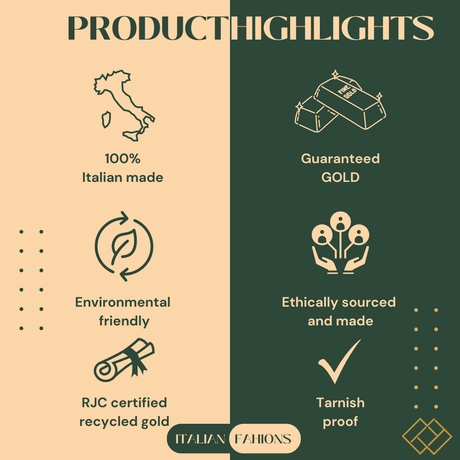
When it comes to gold, we guarantee the use of 100% real gold in all our gold products.

FLASH SALE— Save 25%

HAPPY25NOW
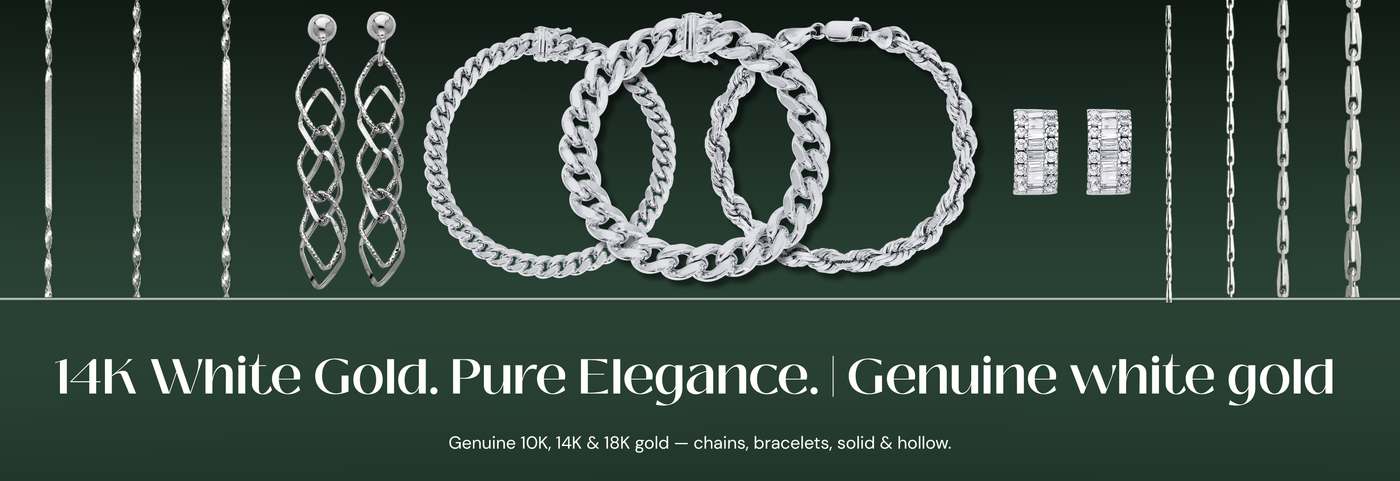
Italian 14K white gold jewelry

14K White Gold Jewelry

14K White Gold: Alloy, Plating, and What Changes Over Time

14K white gold is yellow gold alloyed with white metals — typically palladium, nickel, or a combination — that shift the color of the gold from yellow toward silver-white. The 58.5% gold content is identical to 14K yellow gold; the color difference is entirely a result of the alloy composition. White gold is gold, with the same intrinsic gold value per gram as yellow gold of the same karat.

Rhodium Plating: What It Does and How It Wears

The bright white, highly reflective surface of finished white gold jewelry is produced by rhodium plating — a thin electroplated layer of rhodium applied over the white gold alloy. The underlying 14K white gold alloy has a slightly off-white or light gray tone; the rhodium produces the mirror-bright surface associated with white gold jewelry. This plating wears over time, particularly on pieces that experience friction — rings and bracelets faster than earrings and pendants. A white gold ring worn daily will typically need replating every one to three years; earrings may last five or more years. Replating is a standard jewelry service that restores the original appearance and is widely available.

14K White Gold vs. Platinum: The Practical Comparison

The comparison comes down to four factors: price, hardness, weight, and maintenance. Platinum is more expensive (higher metal cost), significantly heavier per volume, and requires no replating because it is naturally white. 14K white gold is less expensive, lighter (density approximately 14g/cm³ vs. platinum's 21g/cm³), and the standard fine jewelry white metal for buyers who want the white gold aesthetic at an accessible price. For everyday fine jewelry where cost and weight comfort are priorities, 14K white gold is the standard choice.

View as

What is 14K white gold jewelry?

14K white gold jewelry is fine gold jewelry crafted from an alloy that combines 58.3% pure gold with white metals — typically palladium, silver, and zinc — to achieve a bright silver-white appearance. The resulting alloy is then finished with rhodium plating, a rare platinum-group metal, to produce the crisp, mirror-bright white surface 14K white gold is known for.

The white color of white gold is the result of careful alloy engineering, not the presence of a different metal. Pure gold is yellow — unmistakably, deeply warm yellow. To create white gold, the yellow is neutralized through strategic alloying: palladium is the primary whitening agent in premium white gold alloys, effectively muting the gold's natural color. The rhodium plating that follows completes the transformation, delivering the clean, reflective white surface that makes 14K white gold such a compelling choice for buyers who want the warmth and permanence of gold with a contemporary, silver-toned aesthetic.

14K white gold is the most popular metal choice for diamond engagement rings and fine white jewelry in the US market — and for good reason. It balances gold content (58.3%), durability (harder than 18K due to the alloying metals), and brilliant appearance in a way that no other metal at its price point matches. Understanding that it's genuine gold with a rhodium finish helps set appropriate care expectations from the start.

Is 14K white gold real gold?

Yes — 14K white gold is genuine gold. The '14K' designation means the alloy contains 58.3% pure gold (14 parts gold out of 24 parts total). The white color comes from the metals alloyed with the gold and the rhodium plating on the surface — the gold content itself is real, permanent, and retains its intrinsic value regardless of the surface treatment.

I address this question daily in the store, and I understand why it creates confusion. When customers imagine 'real gold,' they're thinking of yellow gold — the warm, familiar color that defines gold in the cultural imagination. White gold doesn't look like that gold, so the question is natural. But the gold is genuinely there: 58.3% of every gram of 14K white gold is pure gold. The alloying metals (palladium, silver, zinc) and the rhodium surface treatment are what change the color and surface properties — they don't reduce the gold content or the intrinsic value the gold provides.

The simplest proof of white gold's authenticity: look at the karat stamp on any 14K white gold piece — the clasp, the inside of the ring shank, the post of an earring. '14K', '585', or 'Au585' are all stamps that confirm 58.3% gold content under federal standards. Any fine jewelry piece sold as 14K white gold in the US must meet this standard or the seller is committing federal fraud. The gold is real — only the color has been engineered.

What is the difference between 14K white gold and platinum?

14K white gold and platinum are both white metals used in fine jewelry, but they differ fundamentally: 14K white gold is a gold alloy with rhodium plating (58.3% gold, white appearance requires maintenance); platinum is a naturally white precious metal (95% purity, no plating required, maintains its color permanently). Platinum is approximately 3–4x more expensive per gram than 14K white gold and is significantly denser.

The practical differences between 14K white gold and platinum are more significant than the visual similarity suggests. Platinum's natural white color never fades or requires replating — it's the same material throughout, and its surface develops a desirable patina over decades of wear. White gold's rhodium plating is a surface treatment that wears off at high-contact points over time, typically requiring replating every 1–3 years for daily-wear pieces. This maintenance difference is the single most important consideration for buyers choosing between the two metals.

For most buyers: 14K white gold provides the white metal appearance at a significantly lower price point with the understanding that periodic rhodium replating (typically $50–$100 at a jeweler) is part of the care routine. Platinum is the appropriate choice for buyers who want a naturally white metal that requires no surface maintenance, are comfortable with the premium price, and understand that platinum's malleability means it develops a patina rather than maintaining a mirror finish without polishing.

What is the difference between 14K and 18K white gold?

14K white gold contains 58.3% pure gold and 41.7% alloying metals; 18K white gold contains 75% pure gold and 25% alloying metals. 14K is harder (the higher alloy proportion provides more hardness), more scratch-resistant, and less expensive per gram. 18K is softer (higher gold content means fewer hardening alloy metals), produces a warmer underlying tone, and costs approximately 30% more per gram at the same weight.

The karat choice for white gold is particularly interesting because the trade-off runs counter to intuition: higher gold content in white gold actually means less durability. The alloying metals in 14K white gold — palladium and silver — provide structural hardness that pure gold lacks. At 18K, there's simply less room for these hardening metals, resulting in a softer alloy that shows wear more quickly at high-contact points like ring shanks and bracelet clasps. After 30 years in jewelry, I consistently recommend 14K over 18K for white gold pieces worn daily — the durability advantage is meaningful.

The price difference between 14K and 18K white gold at the same gram weight reflects the gold content difference. For buyers considering the upgrade to 18K white gold: the color difference when rhodium-plated is negligible (both look identical when freshly plated), the durability difference favors 14K, and the price premium for 18K reflects gold content rather than a superior wearing experience. 18K makes more sense for fine pieces worn occasionally than for daily-wear jewelry.

Is 14K white gold hypoallergenic?

14K white gold from Italian manufacturers using palladium-based white alloys is generally safe for sensitive skin — palladium is not a significant allergen. However, some 14K white gold alloys use nickel as a whitening agent, and nickel is the most common jewelry allergen. Always confirm the alloy composition: 'nickel-free' or 'palladium alloy' white gold is appropriate for sensitive skin; nickel-containing white gold is not.

This distinction matters enormously and is frequently overlooked in white gold purchasing. The white metal appearance of white gold can be achieved through nickel alloying (cheaper, harder, but a major allergen) or through palladium alloying (more expensive, premium, non-allergenic). Italian fine jewelry manufacturing standards have moved decisively toward palladium-based white gold alloys, partly in response to EU nickel regulations that restrict nickel in skin-contact jewelry. When buying 14K white gold, the question 'is this nickel-free?' is the most important care question a sensitive-skin buyer can ask.

If you've had reactions to previous white metal jewelry: the piece was almost certainly nickel-containing. The reaction is to the nickel, not to the gold. A nickel-free 14K white gold piece from a reputable Italian manufacturer is appropriate for the vast majority of people with sensitive skin. Request written confirmation of 'nickel-free' alloy composition, or look for Italian triple hallmarking which signals premium alloy standards. Test by wearing on the inner wrist for one hour before full purchase commitment.

What is rhodium plating on white gold?

Rhodium plating is a thin electroplated layer of rhodium — a rare platinum-group metal — applied to the surface of white gold jewelry to achieve its bright, mirror-white appearance. The rhodium layer, typically 0.5–1 micron thick, produces the crisp white color and high-reflectivity surface that defines 14K white gold jewelry's appearance. Without rhodium plating, the underlying white gold alloy appears slightly warm or yellowish.

Rhodium is one of the rarest and most valuable metals on earth — more expensive than gold, platinum, or palladium per troy ounce. The quantity used in plating is microscopic (fractions of a gram per piece), but its effect on appearance is dramatic. Rhodium's extreme hardness and bright white reflectivity transform the slightly warm underlying white gold alloy into the brilliant, mirror-finish white surface buyers expect. The plating process is electrodeposition — the piece is immersed in a rhodium solution and electrical current deposits the metal atom by atom onto the surface.

Rhodium plating is not a defect or a shortcut — it's an engineered surface treatment that's standard practice across the fine jewelry industry globally. Understanding it as a maintenance requirement rather than a surprise degradation helps owners manage their jewelry correctly. The plating wears from concentrated contact points first — these are the areas to watch for the first signs of replating need.

How long does rhodium plating last on white gold?

Rhodium plating on daily-wear 14K white gold jewelry typically lasts 1–3 years before visible wear appears at high-contact surfaces. Ring shanks show wear soonest — typically 12–18 months of daily wear. Pendants and earrings retain plating much longer (3–5+ years) because they experience less mechanical abrasion. Replating restores the original appearance completely.

The variation in plating lifespan is almost entirely determined by mechanical abrasion — how much contact the surface experiences during daily activity. A ring worn while washing dishes, typing, and gripping throughout the day experiences dramatically more surface abrasion than the same ring worn only socially. The first sign of wear isn't color change — it's a very slight dulling of the high-reflectivity surface at the highest-contact points. This is completely normal and expected, and simply indicates it's time for the routine replating service.

How to extend plating life: remove white gold rings for household cleaning, dishwashing, and heavy manual activity; store white gold pieces in individual pouches rather than mixed with other jewelry; clean white gold with mild soap and soft cloth rather than abrasive cleaners. These habits can extend plating life from 12–18 months to 2–3+ years between services.

How much does it cost to replate white gold jewelry?

Rhodium replating at a professional jeweler typically costs $50–$100 for a ring, $80–$130 for a bracelet, and $40–$80 for pendant or earrings, depending on the complexity of the piece and your location. Most jewelers complete replating in 24–48 hours. The process fully restores the original bright white appearance and adds a fresh rhodium layer of appropriate thickness.

Replating cost relative to the value of the piece makes white gold an excellent long-term investment even accounting for maintenance. A $1,500 white gold ring replated once every two years at $75 per service represents $37.50 per year in maintenance cost — a fraction of the piece's value and a completely routine expense for a fine jewelry item worn daily. The replating process is not a repair for damage; it's scheduled maintenance, like professional cleaning for a dress shoe or service for a fine watch.

What happens during replating: the jeweler cleans the piece ultrasonically, inspects for any damage requiring repair, polishes the surface to restore the base metal's finish, and then electroplates the rhodium layer. The result is indistinguishable from new. Bring the piece in for replating when you first notice the warm undertone appearing at wear points, not after the plating has worn through to the base metal.

Can you wear 14K white gold jewelry every day?

Yes — 14K white gold is an excellent choice for daily-wear jewelry. Its hardness (harder than 18K gold and most yellow or rose gold alloys) provides good scratch resistance, the rhodium surface protects the underlying alloy, and the gold content is chemically stable against corrosion, tarnish, and the majority of substances encountered in daily life. The primary maintenance consideration is periodic rhodium replating, not structural durability.

14K white gold's durability profile makes it one of the best choices for daily-wear fine jewelry. The comparison point that matters: 14K yellow gold at the same karat has similar gold content but without the hardening effect of palladium alloying. 14K white gold's alloying metals tend to produce a harder alloy than 14K yellow gold, giving it meaningful scratch resistance for daily wear. This is why 14K white gold is the dominant choice for engagement rings worn constantly — it holds up better over decades of daily wear than softer alternatives.

Daily wear habits that extend the life of 14K white gold: remove for cleaning with harsh chemicals (bleach, ammonia-based cleaners, chlorine) which can affect the rhodium plating's adhesion over time; remove for high-impact physical activity; clean weekly with warm water and a drop of dish soap, using a soft toothbrush on the underside where oils and products accumulate.

Can you shower with 14K white gold jewelry?

Solid 14K white gold is chemically resistant to water and is not damaged by showering. The practical concern is product accumulation — shampoo, conditioner, and soap build up on and under settings, dulling brilliance and reducing the sparkle of any set stones. Additionally, frequent exposure to harsh shower products can very gradually affect the rhodium plating's adhesion over time, potentially slightly shortening replating intervals.

The water isn't the issue — it's what's in the water and what comes off your body. Plain water does nothing to 14K white gold. But the film of soap, shampoo, and conditioner that accumulates in the micro-recesses of a setting, particularly around prongs and under stones, is both a sparkle-killer and a setting health issue. A stone sitting in a film of soap residue isn't as secure as a stone in a clean, dry setting. The simple habit of removing fine jewelry before showering and replacing it after eliminates this accumulation entirely.

If you consistently shower with white gold jewelry: plan to clean more frequently — warm water, drop of dish soap, soft toothbrush on the underside of settings and behind stones, rinse thoroughly, dry with a lint-free cloth. This cleaning routine takes two minutes and counteracts the accumulation that dulls white gold jewelry's brilliance between professional cleanings.

About 14K White Gold Jewelry

14K White Gold: The Alloy, the Plating, and What Changes Over Time

White gold is not a naturally occurring metal category — it is yellow gold with white-metal alloys mixed in. 14K white gold contains 58.5% pure gold and 41.5% white alloy metals (typically palladium or nickel plus silver). The gold itself is yellow; the alloy shifts the color toward white-gray. Even fully alloyed, 14K white gold still has a slight warm or gray undertone that becomes more visible if the rhodium plating wears away significantly. The bright white color of the finished piece is the rhodium layer, not the alloy itself.

Rhodium plating wears at different rates depending on the piece and the wearer. A white gold ring worn daily will need replating every one to three years on average; the same metal in earrings may last five or more years before replating is needed because earrings experience far less friction. The underside of a ring band (the part that contacts surfaces most) is typically the first area where the rhodium wears through and the yellow-gray alloy becomes visible. This is not a defect — it is a normal maintenance cycle for white gold jewelry, and replating is an inexpensive service widely available at jewelry stores.

For buyers choosing between 14K white gold and platinum, the practical differences matter more than the marketing: 14K white gold is lighter (density approximately 14g/cm3 vs platinum's 21g/cm3), which means a wide white gold bracelet feels noticeably less heavy than the same bracelet in platinum. Platinum is significantly more expensive — a price difference of 3x or more for the same piece — and requires no plating maintenance. For everyday fine jewelry where cost and weight comfort are priorities, 14K white gold is the standard choice. For pieces meant to last multiple generations with minimal maintenance, platinum is the premium alternative.

Compare /3

Loading...