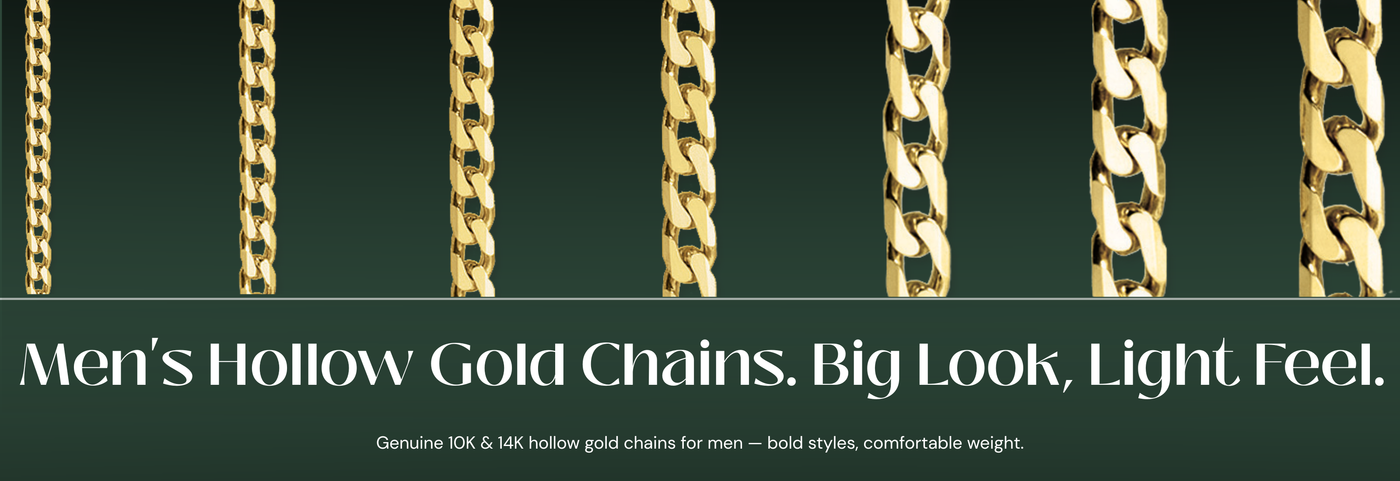
Hollow gold chains use a different construction than solid chains: each link is formed from thin gold sheet or tubing shaped into the link pattern, rather than from solid gold rod or wire. The karat stamp on a hollow chain (10K, 14K) indicates the purity of the gold in the link walls — not the construction method. The gold is real; there's simply less of it per link than in an equivalent solid chain. This makes hollow construction significantly lighter and less expensive than solid construction at the same visual width.
The practical implication is that hollow construction makes wider, more visually substantial chains accessible at lower price points. A 10mm hollow Cuban link chain costs substantially less than a 10mm solid Cuban link chain, and at a visual glance looks nearly identical. The weight difference in the hand is noticeable to someone who's held both, but not to someone who hasn't. For buyers who want the look of a wide, substantial chain without the price of solid construction, hollow chains provide a genuine option.
The tradeoff for hollow construction is durability. Hollow links can dent if caught in a car door, compressed under weight, or subjected to a sharp direct impact. Once a hollow link dents, the deformation is permanent and the chain's appearance is affected. For a chain worn daily in physical work or active environments, solid construction is the better long-term choice. For a chain worn regularly in lower-impact situations — office, social, moderate daily use — hollow construction provides good value at the same visual width.