
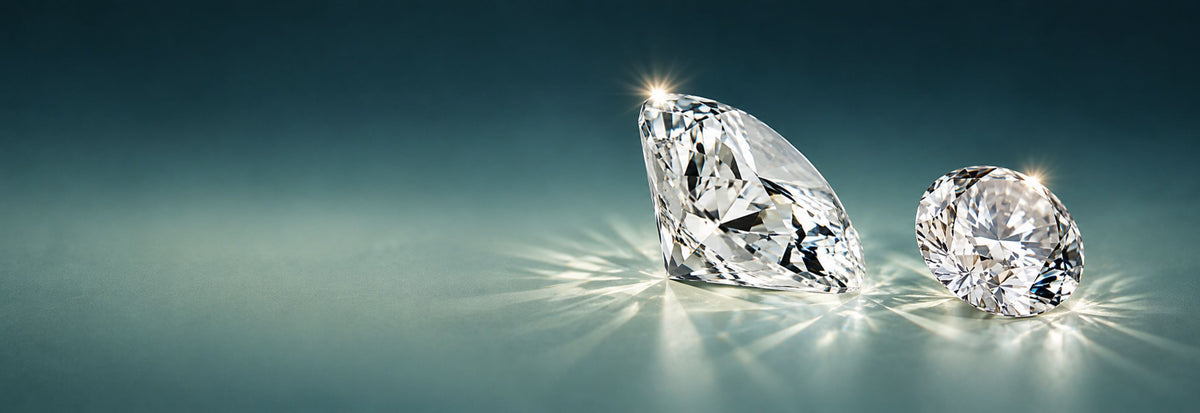
Lab-Grown vs Natural Diamonds
Both are 100% real diamonds — identical in chemistry, hardness, and brilliance. The difference is where they form, and what you pay.
Natural Diamonds
Formed over billions of years deep in the earth. They carry rarity, tradition, and the strongest long-term sentimental value. Typical grades in our collection: G–H color, SI2–SI3 clarity — bright, lively stones at honest prices.
Lab-Grown Diamonds
Grown above ground using advanced technology that recreates the earth's conditions. They are chemically, physically, and optically identical to mined diamonds — they even pass a diamond tester. Because supply is not limited by mining, you get higher grades for less: our lab-grown pieces are typically F+ color and VS clarity — whiter and cleaner than the natural equivalents — at a fraction of the price.
Quick Comparison
| Natural | Lab-Grown | |
| Is it a real diamond? | Yes | Yes |
| Hardness | 10/10 | 10/10 |
| Typical grades (our collection) | G–H · SI2–SI3 | F+ · VS |
| Price for the same size | Higher | 50–70% less |
| Best for | Tradition, heirloom sentiment | Bigger, brighter stones on any budget |
The honest framing: natural is the tradition-and-rarity choice, lab-grown is the maximum-beauty-per-dollar choice — and neither is wrong.
The 4 C's in Plain Language
Cut — how well the stone's angles return light. Cut is where sparkle lives; a smaller, better-cut diamond outshines a bigger dull one. Never trade down on cut. All our stones are full-cut for maximum brilliance.
Color — graded D (colorless) to Z (tinted). The visible difference between D and G is small face-up, especially set in yellow gold, where G–I grades look white and cost far less.
Clarity — internal marks graded FL to I. The money grade is VS/SI: inclusions invisible to the naked eye. Paying for microscope-clean (FL/IF) buys pride, not visible beauty.
Carat — weight, not size (CTW = total carat weight of all stones in a piece). Price jumps at round numbers (0.5, 1.0), so 0.9ct looks like 1.0ct for noticeably less. Shape affects spread: ovals face up larger than rounds of equal weight.
Certificates
Any significant diamond should carry a grading report — GIA or IGI — stating its 4 C's independently of the seller. Treat an ungraded "G VS2" claim as marketing; treat a certificate as fact.
Caring for Diamond Jewelry
Diamonds are the hardest natural material but their settings are gold: check prongs yearly, clean with warm soapy water and a soft brush, and keep diamonds stored apart — they scratch everything, including each other.
Questions? Contact us — we will help you choose with confidence.