Frete grátis para todos os pedidos acima de US$ 75 nos Estados Unidos

Quando se trata de ouro, garantimos a utilização de ouro 100% verdadeiro em todos os nossos produtos de ouro.

FLASH SALE— Save 25%

HAPPY25NOW
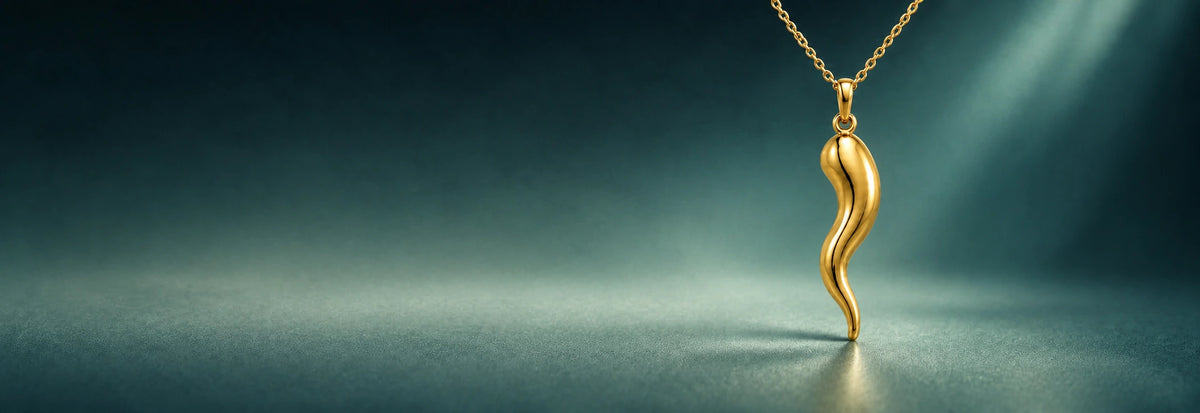
Italian hollow charm gold pendants

Pingente de encantos ocos

Hollow Gold Charm Pendants: Lightweight Keepsake Designs in Fine Gold

Hollow charm pendants in fine gold use hollow construction to produce pendants with the visual scale and presence of solid gold designs at a fraction of the weight and cost. Charm pendants — letters, numbers, hearts, stars, symbols, and decorative shapes — are designs where the pendant's silhouette and shape are the defining visual element rather than the metal's weight, making hollow construction particularly well-suited to this category. In fine gold, hollow charm pendants allow buyers to wear larger, more visible charm designs in 10K, 14K, or 18K gold without the weight and price of equivalent solid pieces.

Why Hollow Construction Works Well for Charms

Charm pendants are designed to be recognized at a glance — the letter, heart, or symbol shape needs to be large enough to read clearly, but the pendant doesn't need to be heavy to fulfill its purpose. Hollow construction allows charm pendants to be made at the scale where they read clearly at normal viewing distance without the weight that would make the pendant uncomfortable or require a very heavy chain to support it correctly. In fine gold, hollow charm pendants occupy a practical middle ground between small lightweight solid charms and large solid gold pieces.

Caring for Hollow Gold Charm Pendants

Hollow charm pendants require more careful handling than solid pendants of equivalent visual scale. The thin gold shell that forms the pendant's visible surface is susceptible to denting under point impact — dropping the pendant onto a hard surface can cause deformation that is difficult to reverse in a hollow piece. The pendant's bail should be checked periodically to ensure it has not been bent from pendant movement during wear. With appropriate care, hollow gold charm pendants maintain their appearance for many years of regular wear.

Ver como

What is a hollow gold charm pendant?

A hollow gold charm pendant is a small decorative gold pendant — typically featuring a symbolic, figurative, or thematic motif such as a heart, cross, star, animal, or letter — constructed with hollow gold walls rather than solid gold throughout, reducing weight and cost while preserving the charm's visual presence and genuine gold content.

The hollow construction of charm pendants uses thin gold tubing or stamped gold sheet formed into the charm's shape, with soldered seam closures that seal the hollow interior. For three-dimensional charm shapes (hearts, animals, globes), two hollow halves are formed separately and joined at a seam — this is the 'puffed' construction common in gold charms that gives them their rounded, three-dimensional appearance without the weight of solid gold. The bail (the loop or jump ring through which a chain passes) is attached separately and is typically solid gold for structural integrity.

Hollow gold charm pendants are the most common form of gold charm sold in fine jewelry retail — the vast majority of branded and Italian-made gold charm pendants available in the market are hollow construction, with solid gold charm pendants being a premium specialty category. For buyers, this means hollow construction is the expected standard rather than a compromise, and quality differences between hollow charm pendants are primarily in wall thickness, solder quality, and bail strength rather than in whether the charm is hollow.

What types of charms are available in hollow gold?

Hollow gold charm pendants are produced in virtually every motif and theme: hearts (plain, puffed, open-cut, layered), crosses (Latin, Celtic, Orthodox, diamond-cut), stars (five-point, six-point, shooting star), animals (elephant, butterfly, horse, dolphin, owl, cat), religious symbols, sports motifs, zodiac signs, numerals, letters and initials, and abstract geometric forms.

Italian hollow gold charm manufacturing covers both classic motifs (the puffed heart charm is one of the all-time bestselling Italian jewelry pieces) and trend-driven themes. The puffed or three-dimensional construction that hollow fabrication enables is particularly effective for figurative charms — a hollow puffed heart has more visual depth and dimension than a flat stamped equivalent, and the hollow manufacturing process makes this three-dimensional effect achievable at accessible price points.

For buyers selecting a hollow gold charm: the motif's personal meaning is generally the primary selection criterion, followed by size (small 10-15mm charms for layered or delicate wear; medium 20-25mm charms for solo statement wear), karat (10K for budget-conscious; 14K for fine jewelry quality; 18K for premium), and whether the charm is plain yellow gold or accented with diamond cuts, gemstones, or enamel detailing. ItalianFashions.com carries the classic Italian gold charm motifs in 14K hollow yellow gold.

Why choose hollow construction for a gold charm pendant?

Hollow construction enables charm pendants to achieve three-dimensional, volumetric shapes — puffed hearts, rounded stars, three-dimensional animals — at weight and cost levels that solid gold cannot match. A hollow puffed heart charm that appears to have substantial volume and visual presence might weigh 1-3 grams hollow, versus 8-20 grams for an identical solid gold version.

The weight reduction from hollow construction is particularly important for charm pendants worn on bracelets or layered necklaces, where multiple charms accumulate and total weight becomes a comfort and structural concern. A charm bracelet carrying five hollow gold charms might weigh 10-15 grams total — comfortable for all-day wear; five solid gold charms of the same visual size might weigh 40-60 grams — heavy and potentially fatiguing on the wrist. Hollow construction makes charm collecting practical rather than financially and physically prohibitive.

Cost impact of hollow versus solid for charm pendants: a 14K hollow puffed heart charm at 2 grams costs the gold equivalent of 1.17 grams of pure gold ($95/gram × 2g × 58.5% ≈ $111 in gold content), while a solid equivalent at 15 grams costs $833 in gold content alone before manufacturing and retail markup. Hollow construction brings genuine 14K gold charms within a realistic gift price range — this is why the hollow gold charm is one of the most gifted fine jewelry items globally.

What karat gold is used for hollow charm pendants?

Hollow gold charm pendants are most commonly available in 14K gold (stamped '585' or '14K'), with 10K (stamped '417' or '10K') being the entry-level option and 18K (stamped '750') being the premium option. Italian-made hollow charm pendants in 14K yellow gold are the dominant category in the fine jewelry market.

Karat choice for hollow charm pendants involves balancing gold content, color, hardness, and cost. 10K hollow charms have higher base metal content (58.3% non-gold alloy) which increases hardness — useful for small charm details that might be vulnerable to denting; but 10K's warmer, more copper-tinged yellow differs from 14K's balanced yellow. 14K hollow charms hit the fine jewelry sweet spot: enough gold content (58.5%) for genuine fine jewelry classification, balanced warm yellow color, and lower alloy hardness that still handles normal charm wear well. 18K charms have the richest yellow color (75% gold) but are softer and cost significantly more per gram.

For hollow charm pendants specifically, 14K is the most widely recommended karat because the charm's visual appearance (which depends on surface area and shape, not weight) is identical across 10K, 14K, and 18K hollow versions — only the color tone and stamp differ. The primary reason to choose 14K over 10K for hollow charms is the slightly richer yellow color and the fine jewelry hallmark status (14K qualifies as fine jewelry in all markets; 10K is fine jewelry in the US but not in some European markets where minimum is 14K).

How do hollow gold charm pendants attach to a chain?

Hollow gold charm pendants attach to a chain through a bail — a small loop or tube of gold soldered to the top of the charm body through which a chain passes or to which a jump ring connects. The bail design is the primary functional element of any charm pendant, as it determines how the charm hangs, moves, and stays on the chain.

Bail types used on hollow gold charm pendants: tube bails (a hollow gold tube soldered to the back of the charm, through which a chain passes — the charm hangs centered and fixed in position, common on flat charms like crosses and stars); loop bails (a solid oval or round gold loop through which the chain passes or a jump ring connects — allows the charm to swivel and hang naturally, common on three-dimensional puffed charms); and spring bails (a hinged bail that opens to clip onto a chain or bracelet without removing the clasp — common on charm bracelet charms). The bail material should always be solid gold (not hollow) for structural integrity.

For chain wear: tube bails work best on chains 1.5-3mm wide where the chain fits through the bail tube comfortably; loop bails with jump rings work on any chain width but can rotate on very thin chains. For charm bracelet attachment: spring bails or lobster-claw connectors allow attachment at any link without opening the bracelet clasp. Inspect bail solder quality when buying a hollow gold charm — the bail-to-charm junction is the highest stress point and poorly soldered bails are the most common failure mode for charm pendants.

What is a bail on a gold charm pendant?

The bail on a gold charm pendant is the attachment hardware — a small gold loop, tube, or clip — that connects the charm to a chain or bracelet. The bail is the structural link between the decorative charm body and the chain it hangs from, bearing all the weight and movement stress of the pendant during wear.

Bail quality is disproportionately important for hollow gold charm pendants because the bail is typically solid gold and receives more mechanical stress than the hollow charm body. A well-made bail is securely soldered to the charm with a smooth, gap-free joint; is sized appropriately for the intended chain width; and is made from gold of the same karat as the charm body. Red flags in bail quality: visible solder bleed or gaps at the bail-to-charm junction; bail too small for the chain (requiring force to thread the chain through); bail misaligned on the charm body causing the charm to hang off-center; or bail made from lower-karat gold than the charm body.

Bail styles by function: tube bail — charm hangs centered, doesn't rotate, best for flat directional charms like crosses and letters where orientation matters; round bail — charm hangs centered, rotates freely, best for symmetrical three-dimensional charms like hearts and stars; hinged/spring bail — snaps open and closed, allows attachment to existing chains and bracelets without chain removal, popular for charm bracelet charms. When buying hollow gold charm pendants for use on a specific chain, bring the chain to the jeweler to confirm the bail fits before purchase.

What chain styles work best with hollow gold charm pendants?

The best chain styles for hollow gold charm pendants are cable, box, and rolo chains — their uniform link structures allow charms to hang centered and move freely without the charm catching on the chain links. Rope and Figaro chains are also popular for charm pendants, with the charm naturally resting at the elongated link in a Figaro's alternating pattern.

Chain width and charm size should be proportional: small charms (10-15mm) look best on chains 1-2.5mm wide; medium charms (20-25mm) work with chains 2-4mm; large statement charms (30mm+) can be worn on chains 3-5mm wide. The charm should visually anchor the chain — if the chain is significantly wider than the charm, the chain visually dominates; if the chain is much narrower than the charm, the charm can appear to overwhelm the delicate chain. Most hollow gold charm pendants include a recommended chain specification.

For charm necklaces vs charm bracelets: necklace chains should be 16-22 inches for solo charm pendant wear; bracelet chains should be 6.5-8.5 inches with spring bails or lobster-claw connectors that allow charm attachment without removing the bracelet clasp. Avoid using hollow gold charm pendants on herringbone or snake chains — these flat, woven chain styles don't accommodate charm bail loops easily and can be damaged by the leverage of a hanging charm.

Can hollow gold charm pendants be layered?

Hollow gold charm pendants are excellent for layered necklace styling — a charm on a short 16-inch chain paired with a plain chain at 20 inches and another charm at 22 inches creates a curated, personalized layered look that showcases multiple meaningful motifs simultaneously.

Layering multiple charm pendants on a single chain (sliding charms) is also possible: use a 20-22 inch cable or box chain and add 2-3 charms with loop bails and jump rings at different points along the chain. Charms will slide to natural resting points based on chain movement and gravity. To keep charms separated at specific positions, use charm spacers or thread the chain through the bail with a crimp bead on either side of each charm's jump ring.

When layering chains with hollow gold charms, consider total weight: a hollow gold charm typically weighs 1-3 grams, so three charms add 3-9 grams to the layered look. This is comfortable for necklace chains but becomes significant for bracelets — charm bracelets with 5+ hollow gold charms can weigh 10-20 grams total. Store layered charm chains separately (one per bag or compartment) to prevent the charm bails and jump rings from intermeshing with adjacent chains during storage.

How do you clean a hollow gold charm pendant?

Clean hollow gold charm pendants by soaking in warm water with a few drops of mild dish soap for 3-5 minutes, then gently scrubbing with a soft-bristle toothbrush — paying special attention to the bail junction, any recessed design details on the charm surface, and the seam where the two hollow halves meet on three-dimensional puffed charms. Rinse thoroughly and dry completely before storage.

Three-dimensional puffed hollow charm pendants have specific cleaning challenges: the seam where the two hollow halves join accumulates skin oil and debris faster than flat surfaces. Use the toothbrush to clean along this seam with a back-and-forth motion. For charms with engraved or textured surface details (diamond-cut patterns, filigree, etched patterns), use the toothbrush bristles to dislodge debris from the recessed areas by working the brush in the direction of the detail's lines rather than across them.

Avoid for hollow gold charm pendants: ultrasonic cleaners (vibration stresses the seam welds on puffed/three-dimensional hollow charms specifically); steam cleaners (high-pressure steam can enter the hollow interior through seam micro-gaps and is difficult to fully evacuate before the moisture promotes interior oxidation); and chlorine-based cleaners (chemically attacks the alloy metals in 10K or 14K gold, particularly at exposed seam edges). Commercial jewelry cleaning solutions marked safe for gold are acceptable — rinse completely after use.

Are hollow gold charm pendants durable for everyday wear?

Hollow gold charm pendants are durable enough for everyday wear as necklace pendants in normal activity — office, casual, and social environments — but require more careful handling than solid gold charms due to the hollow construction's vulnerability to denting from sharp impacts and the seam welds' vulnerability to excessive force.

The most common durability concern for hollow gold charm pendants is denting — a sharp blow from a hard edge (countertop corner, dropped weight, catching on a zipper) can dent the hollow gold walls of a puffed charm, permanently altering its shape. Three-dimensional puffed charms (hearts, stars, animals) are more vulnerable to denting than flat stamped charms (crosses, letters) because the puffed hollow walls have more surface area exposed to potential impact.

Longevity guidelines for hollow gold charm pendants: avoid wearing during physical activity, sports, and gym use; remove before sleep (charm can catch on bedding and receive lateral force on the bail-to-charm junction); clean monthly to prevent oil and debris accumulation in design details and seam edges; inspect the bail solder joint annually. A well-made hollow gold charm pendant from an Italian manufacturer, worn with appropriate care, can last 20+ years as a necklace pendant. Charm bracelet use accelerates wear due to elevated impact frequency against hard surfaces.

About Hollow Gold Charm Pendants

Hollow Gold Charm Pendants: Lightweight Keepsake Designs in Fine Gold

Hollow charm pendants in fine gold use hollow construction to produce pendants with the visual scale of solid gold designs at a fraction of the weight and cost. Charm pendants — letters, numbers, hearts, symbols — are designs where the silhouette is the defining visual element rather than the metal's weight, making hollow construction particularly well-suited to this category.

Charm pendants need to be large enough to read clearly at a glance but don't need weight to fulfill their purpose. Hollow construction allows charm pendants to be made at the recognizable scale without the weight that would require a heavy chain or create wearing discomfort. In fine gold, hollow charms occupy a practical middle ground: clearly visible, comfortable to wear, accessible in price.

Care: the thin gold shell is susceptible to denting under point impact — avoid dropping on hard surfaces or catching under pressure. Check the bail periodically for deformation from pendant movement. With appropriate care, hollow gold charm pendants maintain their appearance for many years of regular wear.

Comparar /3

A carregar...