Free shipping on all orders over $75 in the United States

When it comes to gold, we guarantee the use of 100% real gold in all our gold products.

FLASH SALE— Save 25%

HAPPY25NOW
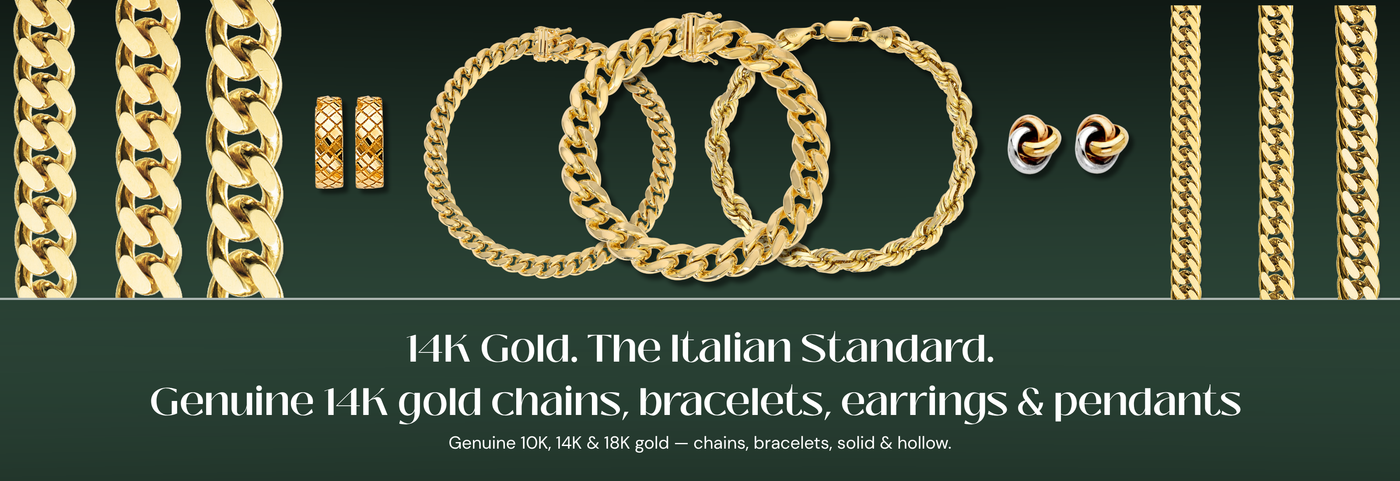
Italian 14K gold jewelry collection

14K Gold Jewelry Collection

14K Yellow Gold — America's Standard for Fine Jewelry.

14K became the dominant gold standard in the United States because it occupies the right balance point: 58.3% pure gold gives it a noticeably warmer, richer yellow tone than 10K, while the remaining alloy content keeps it hard enough for daily wear. It's the professional benchmark for fine jewelry across the U.S. market.

Why 14K Became the American Benchmark

The Federal Trade Commission sets 10K as the minimum karat that can legally be sold as gold in the U.S. Most jewelers found that 14K offers the best practical balance — more gold color than 10K, more durability than 18K. It became the industry standard for chains, bracelets, and fine jewelry because it works in the real world.

The Color Difference Is Real

14K has a deeper, warmer yellow tone than 10K — the higher gold content produces a richer, more saturated color. The same chain in 14K will also feel slightly heavier than in 10K, because 14K is denser. Many buyers prefer this tactile quality.

View as

What is 14K gold jewelry?

14K gold jewelry is fine jewelry made from an alloy containing 58.3% pure gold — the remaining 41.7% is a blend of silver, copper, and zinc — giving it the strength for daily wear while retaining the warm, rich color and intrinsic value of genuine gold.

After 30 years in fine jewelry, I consider 14K gold the ideal balance in the entire karat spectrum. 24K is too soft for wearable jewelry. 18K is beautiful but softer than most people need. 10K is durable but contains more base metal than gold. 14K hits the exact middle: genuine gold content, verified by the 585 hallmark, in a metal hard enough to handle decades of daily contact. It is not a compromise — it is a deliberate engineering choice that every major jewelry market in the world has settled on as the everyday standard.

When shopping for 14K gold, always verify the 585 or 14K hallmark on the clasp or setting. The hallmark is the legal guarantee of gold content, not the seller's word. Reputable sellers welcome hallmark inspection; those who resist are already answering your question about the piece's authenticity.

Why choose 14K gold jewelry over other options?

Choose 14K gold when you want genuine gold that you can actually wear every day without worrying about denting, bending, or wearing through — it is the most practical intersection of real gold value and real-world durability.

Three decades of watching customers make jewelry decisions has taught me one thing: the jewelry people love most is jewelry they actually wear. 14K gold is the gold people wear. Not 24K — too fragile. Not 10K — too little gold, often allergenic. Not silver — tarnishes, stains skin. 14K gold is worn in the shower, to the gym, to sleep, to work. It doesn't tarnish, doesn't stain skin, doesn't lose color. That daily-wear confidence creates the emotional relationship between wearer and jewelry that turns a purchase into an heirloom.

If you're buying gold jewelry to wear rather than to store, 14K is almost always the right answer. The question isn't whether 14K is good enough — after 30 years, I can tell you it's the best choice. The question is which piece best suits the specific person wearing it.

Is 14K gold worth buying?

Absolutely — 14K gold is worth buying because it combines real, permanent gold value (58.3% pure gold) with the durability to last decades of daily wear, the hypoallergenic properties most people need, and the intrinsic metal content that retains value over time.

In 30 years, I have never had a customer regret buying solid 14K gold jewelry. I have had customers regret buying hollow pieces, plated pieces, and pieces from sellers who couldn't document what the alloy actually contained. Solid 14K gold from a reputable manufacturer is one of the best consumer purchases anyone can make — it serves as beautiful jewelry for decades, holds genuine gold content value, and can be passed to the next generation. The gold you buy today contains metal valued for 5,000 years and will be valuable 5,000 years from now.

For maximum value: buy solid (not hollow), buy from a seller who can show you the hallmark and tell you the gram weight, and buy Italian-manufactured pieces where possible. Those three criteria separate jewelry that rewards you for decades from jewelry that disappoints within years.

Is 14K gold better than 10K gold?

For most buyers, yes — 14K gold is the better choice over 10K. It contains significantly more pure gold (58.3% vs 41.7%), produces the warmer, richer gold color most people want, and is less likely to cause skin reactions because it contains less base metal alloy.

10K gold is technically fine jewelry — it meets the US legal threshold for gold content — but after 30 years I see meaningful differences in practice. 10K alloys use more copper, zinc, and sometimes nickel to reach their formulations, which means higher rates of skin reactions in sensitive wearers. The color of 10K yellow gold is noticeably cooler and less rich than 14K. And the resale and estate value of 10K is substantially lower than 14K — gold buyers pay for gold content, and 10K simply has less of it. The price difference between 10K and 14K at purchase is rarely large enough to justify the compromise.

If budget is the driving concern, I recommend choosing a smaller or simpler piece in 14K rather than a larger piece in 10K. You get more gold, better color, better skin compatibility, and better long-term value. The only scenario where 10K wins is extreme budget constraint where the choice is truly 10K or nothing.

Is 14K gold better than 18K gold?

It depends on the purpose. For everyday wear, 14K is the better practical choice — it is harder, more scratch-resistant, and more durable than 18K. For maximum richness of color and purity, 18K offers more gold content (75%) with a noticeably deeper warm tone.

After 30 years, I sell far more 14K than 18K, and the reason is always the same: people wear 14K. 18K is softer because it contains more gold and less hardening alloy — and gold's softness is a physical constant, not a manufacturing deficiency. A beautiful 18K bracelet worn daily will show surface wear and scratches faster than the equivalent 14K piece. For a ring worn on the dominant hand, for a bracelet worn with daily activity, or for a chain worn constantly — 14K is the smarter durability choice. 18K shines for pieces worn occasionally or for maximum visual statement.

My recommendation: choose 14K for daily wear jewelry — chains, bracelets, everyday rings. Consider 18K for special-occasion pieces, engagement settings where purity matters, or when you specifically want the deeper color 18K produces. Both are genuine fine gold; the choice is durability preference, not quality.

What is the difference between 14K yellow gold, white gold, and rose gold?

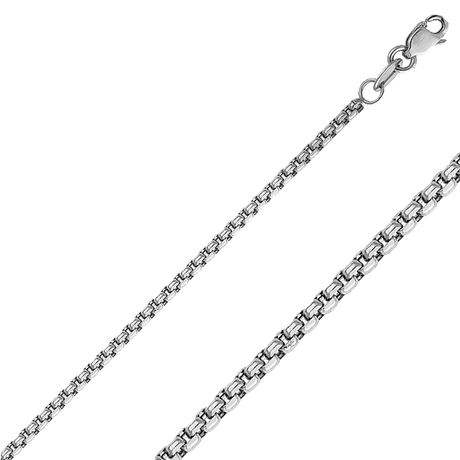
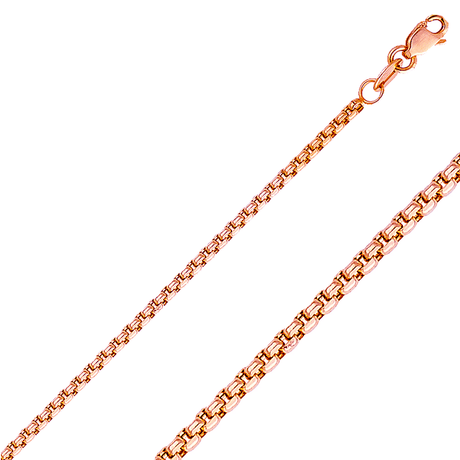
All three are 14K gold alloys with 58.3% pure gold — the difference is in the remaining metals. Yellow gold uses silver and copper to produce the classic warm tone. White gold uses palladium or nickel for a silvery appearance (often rhodium-plated). Rose gold uses a higher copper ratio for its distinctive warm pink tone.

Color choice in gold is one of the most personal decisions in jewelry, and after 30 years I've watched preferences shift dramatically. Yellow gold was dominant through the 1990s, white gold took over in the 2000s, rose gold surged in the 2010s, and yellow gold has returned with full force in the 2020s as buyers rediscover the warmth and authenticity of traditional gold. None of these is objectively better — they suit different skin tones, personal aesthetics, and wardrobe palettes. What I always tell customers: choose the color you'll still love in 20 years, not the current trend.

Yellow gold suits warm and olive skin tones beautifully. White gold complements cool skin tones and pairs with silver and platinum. Rose gold flatters almost every skin tone and adds warmth without the traditional gold statement. When in doubt, try pieces against your skin in natural light before purchasing.

Which is better for everyday wear — 14K yellow gold or 14K white gold?

14K yellow gold is generally the better everyday wear choice between the two. Yellow gold alloys are more stable long-term because they don't require rhodium plating — white gold's bright silver finish is maintained through periodic re-plating that yellow gold never needs.

White gold's secret is that most white gold jewelry is rhodium-plated — a thin layer of rhodium (a platinum-group metal) applied over the alloy to give it a bright silver-white finish. That plating wears off with regular use, typically within one to three years on daily-wear pieces, revealing the warmer, slightly yellowish alloy underneath. It then requires professional re-plating to restore its white appearance. Yellow gold has no such maintenance requirement — its color is intrinsic to the alloy, not a surface treatment. After 30 years, the hidden maintenance cost of white gold is something many buyers don't know until they experience it.

If you love the white-metal look and are committed to re-plating when needed (typically $50–$100), white gold is a beautiful choice. If you prefer truly maintenance-free daily wear, yellow gold or platinum are the zero-maintenance alternatives.

Is 14K gold jewelry good for everyday wear?

Yes — 14K gold is specifically engineered for everyday wear. Its 58.3% gold and 41.7% hardening alloy combination produces a metal hard enough to resist daily scratching, flexible enough to withstand movement without cracking, and inert enough to not react with skin, sweat, or most chemicals.

Every customer who has worn their 14K gold jewelry daily for 20 or 30 years comes back to tell me the same thing: it still looks beautiful. The metal doesn't deteriorate. The color doesn't fade. A properly made 14K gold piece handles everything normal daily life throws at it — office work, casual activity, occasional swimming, daily hand washing — without losing its integrity. After 30 years watching gold jewelry age with its owners, I can tell you that solid 14K outperforms virtually any other wearable material for longevity combined with beauty.

For everyday wear: choose solid construction over hollow, a lobster clasp over spring-ring alternatives for chains and bracelets, and plan an annual professional inspection and cleaning. Those three commitments make a 14K gold piece a genuine lifetime possession.

Can I shower with 14K gold jewelry?

Solid 14K gold is not harmed by fresh water — the metal itself is completely resistant to the water, humidity, and mild temperature changes of a typical shower. The practical concern is product buildup: soap, shampoo, and conditioner residue accumulates in settings and link joints over time, dulling the piece's brilliance.

The gold won't care about the shower — I've been telling customers this for 30 years. 14K gold's corrosion resistance means water has no chemical effect on the metal. What I actually see when examining shower-worn pieces is a film of accumulated personal care product residue that visually dulls the surface but cleans away completely with monthly maintenance. The only real risk is mechanical: chlorinated water from pools can weaken certain alloys and solder joints over years of heavy exposure. Freshwater showers? No issue. Heavily chlorinated pools worn daily for years? Exercise some caution.

If you shower with your 14K gold jewelry regularly, clean it monthly with warm water, mild dish soap, and a soft brush. Pay particular attention to settings and clasps where product accumulates. Annual professional cleaning restores any piece to near-original brilliance.

Can I sleep with 14K gold jewelry on?

Solid 14K gold is not harmed by sleeping with it on — body heat, perspiration during sleep, and movement do not damage the metal. The minor practical risks are mechanical: chains can tangle or develop minor kinking, clasps can catch on bedding fabric, and constant wear accelerates product buildup.

Most customers who ask whether they can sleep with their jewelry on are already doing it. After 30 years, my honest answer is: for solid 14K gold in standard link styles, there's no meaningful damage from sleeping with it on. Heavy Byzantine or very fine-gauge rope chains are more vulnerable to kinking and should be unclasped before bed. Standard curb, figaro, and box chains sleep without issues. The clasp is the element most affected by constant wear — fabric contact over thousands of nights slowly affects spring tension. Check and service the clasp annually if you're a continuous wearer.

If continuous wear is your preference, invest in the most secure clasp available — a lobster claw or box clasp with safety tongue. Annual jeweler inspection catches clasp wear before it leads to loss. These simple habits make continuous wear a non-issue for decades.

About 14K Yellow Gold

The Balance Point Between Purity and Durability

14K gold became the dominant standard in American jewelry for a specific reason: the FTC sets 10K as the minimum karat that can legally be sold as gold in the U.S., and most jewelers found that 14K offers the best balance between gold color and workability. 18K, while more pure, is noticeably softer and scratches more easily under daily wear.

The color difference between 14K and 10K is meaningful. 14K has a deeper, warmer yellow tone that most people associate with classic gold jewelry. The higher gold content also makes 14K slightly denser — the same chain in 14K feels heavier than in 10K, which many buyers prefer for the tactile sense of quality.

14K is also the preferred karat for pieces with stone settings or fine detail work, because the alloy provides enough hardness to hold settings securely while the higher gold content maintains color richness. For chains worn alone, both 10K and 14K are excellent — the decision comes down to color preference and budget.

Compare /3

Loading...