Free shipping on all orders over $75 in the United States

When it comes to gold, we guarantee the use of 100% real gold in all our gold products.

FLASH SALE— Save 25%

HAPPY25NOW
Italian Rolo gold chain

Rolo Gold Chain

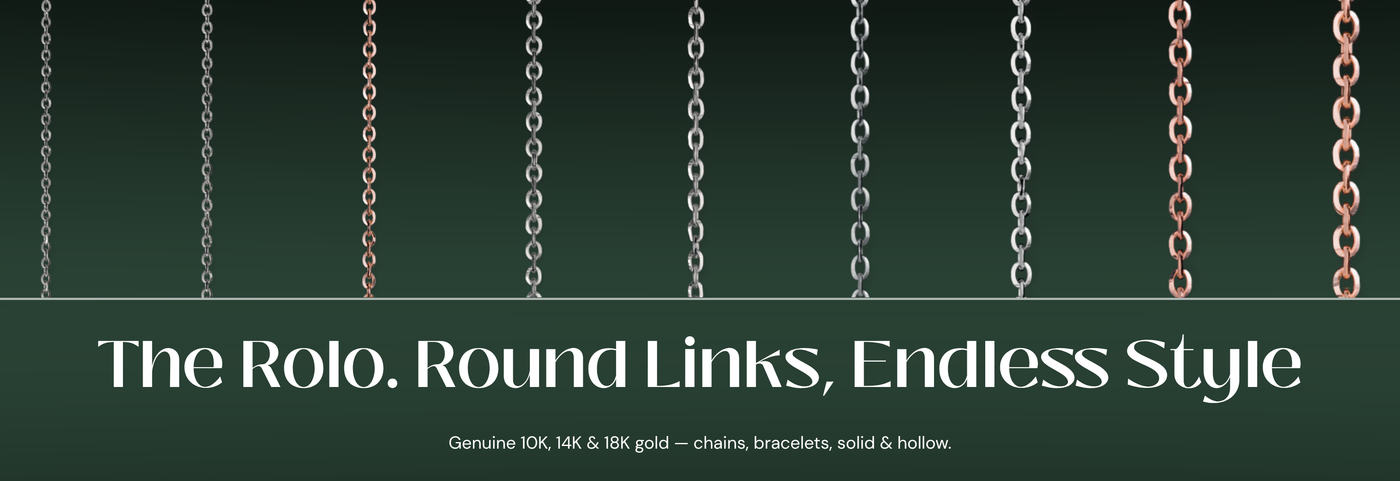
Rolo Gold Chains — The Simplest Link, Done Right.

The rolo chain is the most elemental chain construction: uniform round links connected in a single row. No alternating patterns, no twisted links, no interlocking geometry — just a clean sequence of identical links. The simplicity is the point. A well-made rolo chain in solid gold has a clarity and directness that more elaborate styles can't match.

What Makes a Quality Rolo Chain

Quality shows more clearly in rolo chains than in complex styles. Because there's no elaborate construction to hold the eye, the finish and proportion of each individual link are the chain's entire visual argument. Well-finished rolo links have a consistent, polished face that catches light cleanly. Poorly finished ones have visible irregularities that break the chain's simple rhythm.

Where Rolo Chains Work Best

Rolo chains are the preferred choice for charm bracelets and charm necklaces — the round links are large enough to accept most charm connectors and the uniform construction means charms hang cleanly without bunching. For pendant wear, the rolo's clean surface and free movement make it one of the most versatile pendant chains at any width.

View as

What is a rolo gold chain?

A rolo chain is a link-style chain constructed from uniform, circular or lightly oval interlocking links, each with the same size and weight. The links interlock at right angles — each link passes through the center of the next, creating a chain that drapes evenly and maintains a consistent circular profile along its entire length. Rolo chains are among the oldest and most fundamental chain constructions in goldsmithing, valued for their simplicity, durability, and elegant drape.

The rolo construction is sometimes called 'belcher' in the UK and Australia — both names describe the same link structure. The defining characteristic is the uniformity of the links: every link in a rolo chain is identical in diameter, thickness, and weight. This uniformity creates the chain's characteristic visual rhythm — a continuous sequence of circles that reads as both simple and precise. The circular links reflect light from their curved surfaces, giving rolo chains a subtle sparkle without aggressive diamond cutting.

Italian 14K yellow gold rolo chains are manufactured with particularly precise link dimensions — the specialized chain-making machinery developed in Arezzo produces rolo links with consistent wall thickness and diameter across every link in the chain's length. This manufacturing precision translates to consistent drape and weight distribution that distinguishes Italian rolo chains from lower-quality alternatives with variable link dimensions.

What makes a rolo chain different from a cable chain?

The rolo chain and cable chain both use simple interlocking circular links, but differ in link proportion: a cable chain uses relatively narrow, elongated oval links with a distinctive elongated oval shape; a rolo chain uses thicker, more circular links with a heavier wall thickness relative to link diameter. The rolo link is stockier and more three-dimensional than a cable link — it catches and reflects light more completely due to its rounder cross-section.

The visual difference between the two chains when worn: a cable chain reads as a line of oval shapes with delicate visible detail; a rolo chain reads as a heavier, more substantial line with rounder, bolder individual links. The rolo's thicker link walls make it visually heavier per unit of length than an equivalent-width cable chain. Side by side at the same millimeter width, a rolo chain will weigh more per inch than a cable chain, because the rolo's links have more metal per link.

Wearing context difference: cable chains are the lightest and most delicate chain construction, appropriate for fine, delicate pendant wear and minimalist stacking; rolo chains are more substantial and appropriate for both pendant wear and standalone wearing where the chain itself is the design statement. A rolo chain large enough in link diameter makes a bold enough visual statement to be worn without a pendant.

What is the history of the rolo chain?

The rolo chain is one of the oldest chain constructions in jewelry history — versions of the circular-link interlocking chain appear in ancient Egyptian, Greek, and Roman jewelry dating back thousands of years. The simplicity of the design — uniform circular links interconnected at right angles — made it achievable with primitive wire-forming tools, and its durability made it practical for daily wear over long periods. The modern machine-produced rolo chain is a refinement of this ancient structure using precision manufacturing.

The name 'rolo' is specific to the Italian goldsmithing tradition, where this chain construction is among the most fundamental link styles produced in Arezzo. In the Italian chain manufacturing system, the rolo represents one of the baseline constructions from which more complex variations are derived. The 'belcher' name used in British and Australian jewelry traditions refers to the same construction — the different names reflect regional goldsmithing traditions rather than design differences.

Contemporary rolo chains retain the ancient construction's fundamental simplicity while benefiting from modern precision manufacturing: each link is machine-formed with consistent wire gauge, diameter, and wall thickness, then linked mechanically before soldering at each link junction. The result is a chain that maintains the original design's durability and elegant simplicity while achieving the dimensional precision only modern manufacturing can deliver.

What karats are rolo chains available in?

Rolo chains are available in all standard gold karats: 10K (41.7% pure gold, most durable, most affordable), 14K (58.3% pure gold, the US standard, optimal balance of quality and durability), and 18K (75% pure gold, richest color and feel, preferred in European fine jewelry). 14K yellow gold is the most widely sold rolo chain karat in the US market, representing the standard for fine gold chain jewelry in American retail.

Karat-to-color relationship in rolo chains: 10K yellow gold rolo chains have a slightly paler, less warm yellow tone than 14K equivalents due to lower gold content in the alloy; 14K yellow gold has the classic warm yellow associated with American fine jewelry; 18K yellow gold has a distinctly deeper, richer yellow tone due to higher gold content. The rolo chain's circular link surface area shows this color difference clearly when chains of different karats are compared side by side.

Sterling silver rolo chains are also widely available at significantly lower prices. The rolo construction translates well to silver, and silver rolo chains are popular as fashion jewelry. However, silver tarnishes over time (requiring regular polishing), lacks gold's intrinsic precious metal value, and is not the same product as a gold rolo chain. When purchasing a gold rolo chain, verify the karat hallmark ('14K', '585', '10K', or '18K') rather than relying on color appearance alone.

What sizes do rolo chains come in?

Rolo chains come in a range of link diameters (the most important size variable): 2-3mm link diameter — delicate rolo chain, fine jewelry appearance, appropriate for solo pendant wear; 3-5mm — medium rolo, the most versatile size for both pendant wear and solo wearing; 5-8mm — large rolo, statement jewelry, can be worn solo or with a substantial pendant; 8mm+ — oversized rolo, bold fashion statement, typically chosen for its visual impact as the primary design element.

Length ranges for rolo chains parallel standard chain lengths: 16 inches (choker/collar length); 18 inches (standard necklace, pendant at upper chest); 20 inches (slightly longer, pendant at mid-chest); 22 and 24 inches (fashion lengths, pendant lower on chest). Rolo chains in larger link sizes are also made in bracelet lengths (7-8.5 inches), where the substantial individual link size creates a bold wrist statement.

The weight range for rolo chains varies significantly with link size and chain length: a fine 2mm rolo at 18 inches might weigh 3-5 grams; a medium 5mm rolo at 18 inches might weigh 8-15 grams; a large 8mm rolo at 18 inches might weigh 20-35 grams. As with all gold chains, gram weight is the primary determinant of both price and intrinsic gold value — always ask for gram weight before purchasing a rolo chain.

How do you style a rolo gold chain?

Rolo chains are versatile styling elements: fine rolo chains (2-3mm) work as delicate solo necklaces or as the chain for a pendant; medium rolo chains (4-6mm) are bold enough to wear alone as the primary necklace or substantial enough to carry a significant pendant; large rolo chains (7mm+) make powerful solo statements and are increasingly worn in layered looks where the large-link chain anchors several finer chains.

The rolo chain's circular link shape creates a specific aesthetic: the round links have a softer, rounder visual character than the flat links of a curb chain, giving the rolo a more organic, less structured appearance. This quality makes rolo chains particularly compatible with nature-inspired pendants (leaf forms, organic shapes), symbolic pendants (crosses, hearts), and initial pendants — the soft link character doesn't compete with the pendant's design.

Layering rolo chains: a large rolo chain (6-8mm) worn as an anchor layer, combined with a finer cable or figaro chain at a different length, creates a balanced layered look that uses the rolo's visual weight to anchor the lighter chains. Alternatively, multiple rolo chains in graduated link sizes (2mm, 4mm, 6mm) at different lengths create a graduated, tonal layered look that shows the range of the rolo construction.

Can you wear a rolo chain with a pendant?

Yes — rolo chains work excellently with pendants. The circular link design allows the pendant's bail to slide freely along the chain, centering the pendant naturally. Small to medium rolo links (2-5mm) are ideal for pendant wear — the links are small enough that the pendant bail slides easily and the chain drapes naturally with the pendant's weight pulling it to center. Large rolo links (6mm+) can also work with pendants that have large bail openings, though very small pendant bails may not fit over large rolo links.

The pendant-to-chain proportion for rolo chains: because the rolo's circular links have visual weight, the pendant should be substantial enough not to be overwhelmed by the chain. A very fine, delicate pendant on a large-link rolo chain can look lost; a substantial pendant (15mm or larger) looks proportional on a medium-to-large rolo chain. Lightweight, simple pendants (small initials, simple geometric shapes) look most balanced on fine to medium rolo chains (2-4mm).

Bail compatibility check: before wearing a pendant on a large rolo chain, verify that the pendant's bail opening is wide enough to fit over the rolo's link wire. A 2mm rolo's wire is very fine and fits any bail; a 6mm rolo uses heavier gauge wire that may not pass through very small bail openings. If the bail doesn't accommodate the chain, a hinged bail pendant solves the problem by opening wide enough to accept any chain thickness.

How do you layer rolo chains?

Rolo chains layer well due to their circular link profile — they don't tangle as easily as intricate link styles and their uniform link size allows predictable length spacing between layers. A fundamental layering approach: wear a 16-inch fine rolo (2-3mm) at the collar, an 18-inch medium rolo (4-5mm) at the upper chest, and a 20-inch or 22-inch chain (rolo or different style) at the mid-chest, creating three distinct visual layers with the chain itself as the design.

The mixed-chain layering approach: combine a rolo chain with chains of different styles (a figaro, a cable, a rope) at different lengths to create visual variety. The rolo's simple, rounded links contrast with the flat, geometric figaro links and the twisted structure of a rope chain. Mixing link styles at different lengths creates a more dynamic layered look than multiple rolo chains alone, while still maintaining the visual coherence of all-yellow-gold pieces.

Layering with pendants on one chain and bare chains on others: wear the rolo at 18 inches as a pendant chain (with an initial or cross pendant), then layer a bare figaro at 16 inches and a bare cable chain at 20 inches alongside it. This approach focuses the pendant chain in the middle of the layered group, creating a focal point within the layered look rather than having all chains compete equally for attention.

What outfits work with a rolo gold chain?

Rolo chains are among the most outfit-versatile chain designs: fine to medium rolo chains (2-5mm) complement professional and office contexts without dominating; medium to large rolo chains (5-8mm) work with casual dress, streetwear, and fashion-forward styling; and rolo chains of all sizes work with gold-friendly necklines (V-necks, scoop necks, open collars, boatnecks). The chain's circular link character reads as simultaneously classic and contemporary.

Neckline coordination for rolo chains: V-neck and open-collar shirts position a pendant-bearing rolo in the natural V-line; crew necks pair best with rolo chains at 20-22 inches positioned below the neckline; off-shoulder and scoop-neck tops show the rolo across the decolletage at 16-18 inches; turtlenecks are worn either with the rolo over the turtleneck at 20+ inches, or underneath (allowing the chain to be felt but not seen, for personal meaning without public display).

The gender and age range for rolo chains: the rolo chain is one of the most gender-neutral chain designs in gold jewelry. Fine and medium rolo chains are widely worn by women in fine jewelry contexts; medium and large rolo chains have strong men's jewelry presence, particularly in the 5-8mm link range worn in hip-hop and streetwear aesthetics as well as traditional men's jewelry. The consistent circular link profile reads differently at different sizes while maintaining the same fundamental design character.

What is the difference between a rolo chain and a figaro chain?

A rolo chain uses uniform circular links — every link is identical in size, creating a repeating circle pattern along the chain's length. A figaro chain uses alternating link sizes — typically one longer oval link followed by two or three shorter oval links — creating a distinctive rhythmic pattern. The figaro's alternating link pattern creates visual interest and movement; the rolo's uniform links create a cleaner, more minimal visual rhythm.

The visual character comparison: figaro chains have an Italian tradition-specific aesthetic — the alternating link size is a distinctly Italian design choice refined over decades in Arezzo workshops. Rolo chains have a more universal, timeless character — the uniform circular link has appeared in jewelry across all cultures and time periods. For buyers who want a distinctly Italian chain design, figaro is the more characteristic choice; for buyers who want a classically simple design with deep historical roots, rolo is appropriate.

The practical wearing comparison: figaro chains tend to lie flat against the skin due to their oval link shape, creating a close-fitting drape; rolo chains move more fluidly due to their circular link rotation, giving the chain more three-dimensional movement when worn. For pendant wear, the rolo's freer movement allows the pendant to swing and move more naturally; the figaro's flatter drape keeps the pendant more stable against the chest.

About Rolo Gold Chains

Why the Round Link Has Never Gone Out of Style

The rolo chain is one of the oldest and most elemental chain designs: uniform circular or slightly oval links connected at 90-degree angles, each link identical to the next. There is no pattern, no alternation, no twist — just the clean repetition of a single well-made link. This simplicity means the quality of the individual links is fully exposed. The roundness of each ring, the consistency of the metal gauge, the finish on the inner and outer surfaces — all of it is visible in a way that more complex patterns can partially obscure.

The circular link also creates a distinctive movement quality. Each rolo link rotates freely in two directions relative to its neighbors, giving the chain a smooth, rolling drape that settles naturally against the body. At thinner gauges (2–3mm) this produces a chain with excellent flexibility and very comfortable wear. At heavier gauges (5mm+) the links become substantial enough that the chain has real weight and presence while maintaining that characteristic smooth movement.

Rolo chains are particularly well-suited for charm and pendant wear because the open circular links at any point in the chain can hold a charm ring or pendant bail directly, without requiring a separate jump ring. Many charm bracelets use rolo construction specifically for this reason. The chain is also one of the most repairable styles in fine jewelry — because every link is identical, a broken link can be replaced with an exact match without disturbing the rest of the chain.

Compare /3

Loading...