Free shipping on all orders over $75 in the United States

When it comes to gold, we guarantee the use of 100% real gold in all our gold products.

FLASH SALE— Save 25%

HAPPY25NOW
Italian hollow box gold chain

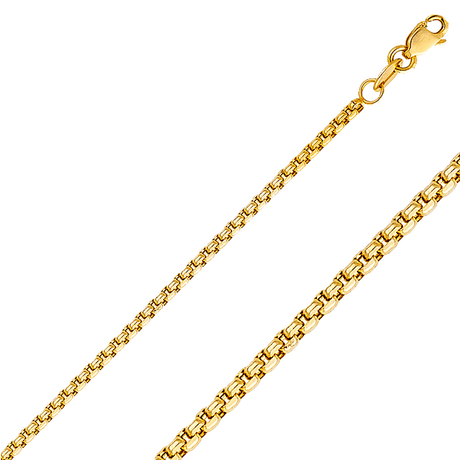
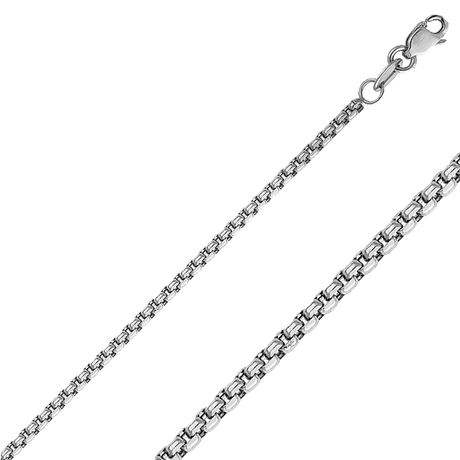
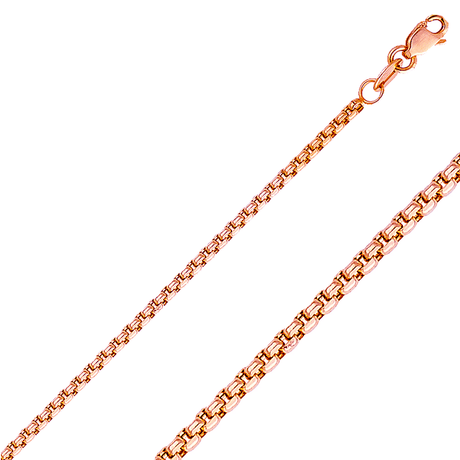
Hollow Box Gold Chain

Hollow Box Chain: The Flat-Lying, Pendant-Ready Gold Chain

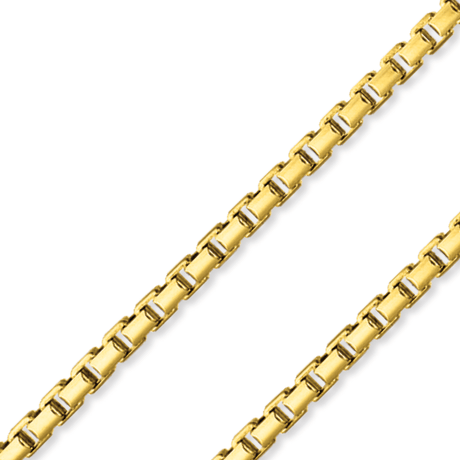
The box chain is constructed from square links — each link a small gold tube bent into a four-sided shape and connected to the next at 90-degree angles. This geometry produces a chain with a flat, smooth surface on the top and bottom face, a distinctive stiffness compared to round-link chains, and a square cross-section that catches light from four distinct angles as the chain moves. The box chain is one of the most popular pendant chains in fine jewelry for structural reasons: the rigid links keep the chain flat against the skin, the square geometry keeps a pendant bail centered without rotation, and the flat surface creates a clean backdrop for any pendant.

The Square-Link Surface Quality

The four flat faces of each square link reflect light as four separate planes rather than the continuous curve of a round link or the twisted surface of a rope. This creates a clean, architectural visual effect — not the maximum sparkle of a diamond-cut rope, but a precise, structured quality that suits a range of styles. Hollow box chains use hollow square tubing for the link construction — the walls of each link are thin gold rather than solid gold. The visual result is identical to solid; the weight and price are significantly lower.

Width Selection: From Pendant Carrier to Statement Chain

Narrow box chains (1–1.5mm) are pendant-carrier chains, nearly invisible against skin but structurally sound for lightweight pendants. Medium box chains (2–3mm) are visible as chains in their own right while still functioning well as pendant carriers. Wide box chains (4mm and above) are statement pieces worn without pendants, where the architectural quality of the square link is the visual focus. At all widths, hollow construction is the standard — the geometry is inherently stable at thin wall thickness.

View as

What is a hollow box chain?

A hollow box chain is a necklace built from square, box-shaped links that are formed from thin gold alloy sheet rather than solid gold. Each link is a sealed hollow cube or rectangular prism — perfectly square or slightly elongated — soldered shut on all faces, creating a smooth-surfaced chain with clean 90-degree edges and a rigid, geometric appearance.

The hollow construction means the chain's exterior surface is identical to a solid box chain — the same sharp geometric profile, the same smooth faces, the same precise right-angle edges — but at a fraction of the gold content and cost. The hollow interior is not visible during wear; the chain reads as fully solid from all angles.

Hollow box chains are the most structurally distinctive of all hollow gold chain styles because the box link's geometry requires extremely precise manufacturing tolerances — each link face must be flat and square, and each edge must be clean and sharp, or the chain's geometric aesthetic is compromised.

How is a hollow box chain different from a solid box chain?

A solid box chain uses solid gold alloy cubes as links — every part of every link is solid metal pressed and polished into the box profile. A hollow box chain uses the same external cube geometry but forms each link from thin gold alloy sheet stamped and sealed into the box shape, with an empty interior.

The practical differences: a hollow box chain weighs 15% to 25% of an equivalent solid box chain, costs 10% to 30% as much, and has a significantly more delicate link wall structure. The visual difference is imperceptible — both chains present the same flat, smooth, precisely geometric box link exterior.

For buyers, the key implication is durability: solid box chain links resist bending, crushing, and impact far better than hollow links. Hollow box chains are appropriate for dress and fashion wear; solid box chains are appropriate for heavy daily wear or heirloom purposes.

What widths are available for hollow box chains?

Hollow box chains are available in widths from approximately 1mm (extremely fine, almost wire-like) to 5mm or 6mm (bold, statement). The most popular widths are 1.5mm to 3mm — widths where the geometric box link reads clearly without the chain becoming physically dominant.

At very fine widths (under 1.5mm), hollow box chains become extremely delicate and should be treated as fashion pieces only. At medium widths (2mm to 3mm), hollow box chains strike the most practical balance of visual clarity, reasonable durability, and cost. At wider widths (4mm to 6mm), hollow box chains make a genuine statement but require careful handling.

Width selection should also consider the chain's intended use. A 1.5mm hollow box chain works best as a pendant carrier or layering piece. A 3mm hollow box chain works as a standalone neck chain. A 5mm hollow box chain reads as a statement piece at a size typically associated with substantial gold weight.

What lengths are available for hollow box chains?

Hollow box chains are available across the standard necklace length spectrum: 14 inches (choker, sits above the collarbone), 16 inches (classic choker, at or just below collarbone), 18 inches (standard necklace, rests on the upper chest), 20 inches (falls lower on the chest), 22 to 24 inches (mid-chest and lower), and 30 inches (long lariat-style).

The most popular hollow box chain lengths are 16 to 20 inches for women and 20 to 24 inches for men. For pendant use, 18 to 20 inches positions most pendants at the ideal visual location on the chest. For layering, hollow box chains in 16-inch, 18-inch, and 20-inch combinations create a tiered effect.

Custom lengths are often available at additional cost. If between standard lengths, order the longer option — box chain links can sometimes be professionally shortened if the chain has adjustable length options built in, but lengthening always requires a matched extension.

How much does a hollow box chain weigh?

Reference hollow box chain weights: at 1.5mm wide and 18 inches, approximately 1.5 to 3 grams; at 2mm wide and 18 inches, approximately 2 to 4 grams; at 3mm wide and 20 inches, approximately 4 to 7 grams; at 4mm wide and 20 inches, approximately 6 to 10 grams; at 5mm wide and 22 inches, approximately 9 to 14 grams.

These weights represent a fraction of equivalent solid box chain weights — a 3mm solid box chain at 18 inches typically weighs 18 to 30 grams in 14K. The dramatic weight differential is what makes hollow box chains affordable at large, bold widths while remaining genuinely wearable as lightweight daily pieces.

Always request gram weight in writing before purchasing. A vendor who declines to specify gram weight should be treated with caution. Gram weight is the only reliable metric for calculating gold content value and verifying the chain is consistent with its stated dimensions and karat.

What is the price range for hollow box chains?

At current gold prices ($3,000/troy oz, $96.46/gram pure), fair retail for hollow box chains: a 3-gram 14K piece has $176 in gold content; fair retail is $264 to $440. An 8-gram 14K piece has $470 in gold content; fair retail is $705 to $1,175. A 12-gram 14K piece has $704 in gold content; fair retail is $1,056 to $1,760.

14K gold content factor: multiply grams by 0.583 x $96.46/gram = $56.24 per gram. White gold or rose gold alloys add nominal cost for rhodium plating (white) or rose alloy formulation (rose) but not significant price premiums over yellow gold. 18K adds approximately 30% to gold content value over 14K at equivalent gram weights.

If a hollow box chain price seems far below these ranges, verify gram weight — chains sold by length rather than gram weight often deliver far less gold content than visual size suggests. If a price seems far above these ranges, compare to solid box chain pricing to confirm you are not paying solid prices for hollow construction.

How can I tell if a box chain is hollow or solid?

Weight is the definitive physical test for chains you can hold. A hollow 3mm, 18-inch 14K box chain should weigh approximately 4 to 7 grams; a solid equivalent should weigh 18 to 30 grams. If the chain feels surprisingly light for its visual width and length, it is almost certainly hollow.

A box chain's rigid geometry makes a secondary visual clue available: hold a hollow box chain and flex it gently. Hollow links will show very slight flexibility in the link walls under direct pressure — solid links have no give whatsoever. This is a subtle test and requires experience to interpret, but it can confirm suspicions.

For online purchases, always request the specific gram weight in grams, not ounces, in writing before purchasing. If a 4mm, 20-inch box chain is listed at 5 grams, it is hollow. If it is listed at 35 to 50 grams, it is solid. The weight should align with the construction type; any ambiguity should be resolved with the vendor before purchase.

What clasp does a hollow box chain use?

Hollow box chains typically use a spring ring clasp or lobster claw clasp sized to visually match the chain's link width. Very fine hollow box chains (under 2mm) often use a spring ring. Hollow box chains at 2.5mm and above typically use a lobster claw clasp, which provides more reliable engagement and easier one-handed operation.

Box clasps are sometimes used for wider hollow box chains (3mm and above) to create a visually integrated finish — the box clasp's flat, squared geometry complements the box link's geometric character. Box clasps with a safety tab add an additional layer of security that spring rings and standard lobster clasps lack.

Clasp quality matters for hollow box chains because the clasp is the chain's highest-wear component. Inspect the clasp spring mechanism before purchase and verify it clicks firmly into engagement. A clasp that fails releases the chain entirely; this risk is worth addressing through quality clasp selection.

How durable is a hollow box chain?

Hollow box chains are moderately durable for their construction type — the geometric box link's rigidity provides more structural resistance than round or oval links in some hollow chain styles, but the thin link wall material remains the fundamental limitation. Box links distribute stress across multiple faces rather than concentrating it at a single point.

The chain's most vulnerable point is the link wall at stress concentration areas — particularly near the clasp where the chain bears most of its tension during daily movement, and at the center front where it contacts clothing and surfaces most frequently. Single-link failures can cause the chain to separate entirely.

Realistic durability expectations: with appropriate care (removal before exercise, sleep, and water exposure), a hollow box chain can last years. With casual daily wear without care protocols, expect accelerated wear at the clasp area and potentially link deformation or failure within months to a few years depending on activity level.

Can I wear a hollow box chain every day?

A hollow box chain can serve as a daily necklace if worn with consistent care protocols. For office work, social activities, and light daily use, the chain is appropriately durable. The key daily wear principle is consistent removal before any activity that introduces physical stress.

Daily wear care protocols for hollow box chains: remove before showering (prevents soap accumulation and seal edge exposure), exercise (eliminates impact and friction stress), and sleep (prevents kinking and clasp stress from sleeping position changes). These three removals cover the vast majority of hollow chain damage scenarios.

A hollow box chain worn with these protocols and stored properly between wears can function as a genuine daily piece for years. A hollow box chain worn through showers, workouts, and sleep will deteriorate significantly faster — the accumulation of small stresses that each individual incident seems to survive will eventually cause fatigue failure.

About Hollow Box Gold Chains

Hollow Box Chain Gold: The Square-Link Style and How It Wears

Box chains occupy a specific functional niche: they are the flattest-lying chain in fine jewelry. The square link geometry means the chain has a flat top surface at all times — it doesn't twist, doesn't develop the sideways curl of round-link chains, and lies flush against the neck or chest as designed. This flat-lying quality is exactly what makes box chains effective pendant carriers: the pendant hangs off a flat, stable surface rather than the undulating curve of a twisted or rounded chain. For buyers whose primary use case is wearing a pendant every day, the box chain's flat geometry is a practical advantage.

The surface quality of a box chain is distinct from other chain styles. The four flat faces of each square link reflect light as four separate planes rather than the continuous curve of a round link or the twisted surface of a rope. This creates a specific visual effect: the chain has four defined light positions as it moves, producing sharp highlights rather than the diffuse shimmer of a rope or the single-face reflection of a flat Cuban. The visual effect is clean and architectural — not the maximum sparkle of a diamond-cut rope, but a precise, structured quality that suits a range of styles.

Box chain width selection is straightforward: narrow box chains (1-1.5mm) are pendant-carrier chains, nearly invisible against skin but structurally sound for lightweight pendants up to several grams. Medium box chains (2-3mm) are visible as chains in their own right while still functioning well as pendant carriers. Wide box chains (4mm and above) are statement pieces worn without pendants, where the architectural quality of the square link becomes the visual focus. At all widths, hollow construction is the standard for box chains — the geometry is inherently stable at thin wall thickness, and the solid-vs-hollow weight difference is proportionally larger for box chains than for round-link styles.

Compare /3

Loading...