Free shipping on all orders over $75 in the United States

When it comes to gold, we guarantee the use of 100% real gold in all our gold products.

FLASH SALE— Save 25%

HAPPY25NOW
Italian gold jewelry for women — chains, earrings, pendants and bracelets

Women's Gold Jewelry Collection

Building a Women's Gold Jewelry Collection That Works Together

A gold jewelry collection built over time creates opportunities for coordination and layering that single purchases don't. A rope chain necklace, a set of hoop earrings, and a Cuban bracelet in the same karat — all 14K yellow gold, made in Italy — create a wardrobe of gold that works together because the metal tone is consistent. This is the practical advantage of building within a karat and metal color: pieces bought at different times still coordinate because the gold reads the same across all of them.

Layering Logic Across Categories

Women's gold jewelry spans categories with different function and wear requirements. Chains and necklaces are the most layered category — multiple chains at different lengths, widths, and styles create combinations that couldn't exist with any single piece. Bracelets stack differently depending on construction: thin bangles accumulate, link bracelets are typically worn alone or with one complement. Earrings frame the face and are the piece most visible in head-to-shoulder photographs — often the jewelry decision with the highest visual impact per dollar in a look. The approach that makes a collection look curated rather than accumulated is scale coordination: pieces sized to each other, not competing for the same visual space.

Fine Gold Jewelry as a Material Asset

Italian gold jewelry represents the intersection of gold value and craft quality that defines fine jewelry. The gold content is verifiable — every piece is karat-stamped. The construction quality is a function of manufacturing tradition: link geometry, clasp engineering, and surface finishing refined across generations in Italy's jewelry-producing regions. Fine gold jewelry is not a fashion item to be replaced seasonally; it is a material asset with real gold value and a piece of craftsmanship that outlasts decades of wear. Building a collection with these pieces means acquiring assets with both wear value and material value — not competing purposes, but the same purchase.

View as

What types of gold jewelry are popular for women?

The most popular gold jewelry types for women are chains and necklaces, bracelets, earrings, and rings. Gold chains — from delicate 1.5mm cable chains to bold 5mm Cuban links — are the most versatile category, worn alone or with pendants across every style context. Gold bracelets span Cuban link, tennis, bangle, charm, and rope styles. Gold earrings range from small studs and classic hoops to large statement drop earrings. Together these four categories cover the full range of women's fine gold jewelry.

Chain and necklace styles popular with women include rope chains, figaro chains, box chains, cable chains, herringbone chains, and Cuban link chains in women's widths (1–5mm). Women's gold bracelets range from delicate tennis bracelets with diamonds to bold Cuban link bracelets at 5–8mm and traditional bangles in single or stacked sets. Gold earrings are a particularly large category for women — hoops alone span from 10mm huggies to 50mm+ statement circles. Gold rings outside of engagement jewelry include stackable bands, signet rings, cocktail rings, and layering rings.

The category of women's gold jewelry has no strict boundaries — men's-width chains, wide Cuban link bracelets, and large-diameter hoop earrings are all widely worn by women who prefer bolder jewelry. The genre labels (men's, women's) in gold jewelry retail are sizing conventions, not restrictions. A woman who prefers substantial jewelry should explore men's chain widths and bracelet sizes, which offer larger gram weights and bolder visual impact. The common thread across all women's gold jewelry is the same — solid construction in 10K, 14K, or 18K gold that holds its value and can be worn for decades.

What karat gold is best for women's everyday jewelry?

14K yellow gold is the most widely recommended karat for women's everyday fine gold jewelry. At 58.5% pure gold, 14K provides an excellent balance of warm gold color, meaningful gold content, and sufficient hardness for daily wear. It is the dominant karat in U.S. fine jewelry retail and is available in every women's jewelry style — chains, bracelets, earrings, and rings — at competitive price points. For a woman who wants to wear her jewelry daily without significant maintenance concern, 14K is the standard recommendation.

10K yellow gold is the most durable and affordable option for everyday women's jewelry. At 41.7% pure gold, 10K's higher base metal content makes it harder than 14K — more resistant to scratching and bending under the mechanical stresses of everyday wear. For women who live active lifestyles, wear jewelry during sports or physical work, or prioritize maximum durability over gold color richness, 10K is the practical choice. Italian-manufactured 10K gold chains and bracelets maintain the same construction quality as 14K at approximately 30% lower material cost.

18K yellow gold is preferred by women who want the richest gold color and highest gold content in fine jewelry. At 75% pure gold, 18K has a distinctly more saturated, deeper yellow than 14K or 10K. It is softer than lower karat alloys and may show wear more readily on rings and bracelets subject to friction, but it is excellent for earrings and necklaces where mechanical wear is minimal. 18K is popular in European and Asian women's fine jewelry traditions and is the standard karat for many luxury designer jewelry houses. The choice between karats ultimately reflects the wearer's balance of priorities: durability (10K), versatility (14K), or prestige (18K).

What is the difference between 10K, 14K, and 18K gold for women's jewelry?

Karat grade indicates the proportion of pure gold in the alloy. 10K (10 karat) is 41.7% pure gold — the minimum legal gold content to be called 'gold' in the United States. 14K is 58.5% pure gold. 18K is 75% pure gold. Each karat grade is a different alloy with different properties: as karat increases, the piece contains more pure gold, displays a richer yellow color, and has higher intrinsic metal value — but also becomes softer and more expensive per gram.

Practical differences for women's jewelry: 10K gold is the hardest, most scratch-resistant, and most affordable. A 10K gold chain or bracelet in the same gram weight as a 14K piece costs approximately 30% less but contains less pure gold. 14K strikes the most widely accepted balance — hard enough for daily wear, rich enough in gold color for a warm, distinctly gold appearance, and priced accessibly relative to gold content. 18K is noticeably softer (more prone to scratching in rings and bracelets) but carries the deepest yellow color and the most gold content per gram.

For women choosing between karats: if you will wear the piece daily and want maximum durability at the lowest cost, choose 10K. If you want the standard fine jewelry choice that balances all factors well, choose 14K. If you want the richest gold color and the highest gold content regardless of cost, choose 18K. All three are genuine gold jewelry — the choice is about personal priorities, not about one being inherently 'real' and the others not. All three karat grades, when purchased as solid-construction pieces, retain their gold content value permanently and can be resold as gold.

What gold color is most popular for women's jewelry?

Yellow gold is the most purchased gold color for women's jewelry globally. The warm, rich yellow of 14K and 18K yellow gold is the historically dominant metal color in women's fine jewelry across virtually all cultural traditions. In the contemporary U.S. market, yellow gold chains, bracelets, and earrings are the largest-selling category of women's gold jewelry by volume. Yellow gold's warm tone complements all skin tones and coordinates naturally with warm-toned clothing and accessories.

White gold is the second most popular gold color for women's jewelry, particularly in engagement rings, wedding bands, diamond settings, and fashion-forward pieces. White gold is a gold alloy with a rhodium plating that gives it a cool, silver-white appearance. It became the dominant metal for women's diamond jewelry in the late 20th century due to its visual compatibility with diamonds and its association with contemporary, minimalist aesthetics. White gold requires periodic rhodium re-plating (every 1–3 years) to maintain its bright white appearance.

Rose gold — a gold-copper alloy with a warm pink hue — is the third major gold color for women's jewelry. Its popularity surged in the 2010s and has remained strong as a contemporary, romantic, and fashion-forward alternative to yellow and white gold. Rose gold is particularly popular for women's stackable rings, bracelets, and earrings. It coordinates particularly well with warm skin tones and complements pink, blush, and earth-tone clothing. The three gold colors can be worn together — mixing yellow, white, and rose gold in a single jewelry look is a popular contemporary styling approach.

Is solid gold worth it for women's everyday jewelry?

Solid gold is the appropriate choice for any gold jewelry intended for daily or near-daily wear over years or decades. The key advantage of solid gold over hollow gold, gold-filled, or gold-plated alternatives is permanence: solid gold does not wear through, peel, or expose a base metal underneath. A solid 14K gold chain worn every day for 30 years looks the same as it did on day one, plus the natural patina of wear. No plating wears off, no base metal becomes visible, and no surface treatment requires renewal.

The practical value argument for solid gold in daily jewelry: consider that a solid 14K gold chain might cost $400–800 for a quality 16–18 inch piece in women's gauge (1.5–3mm). That chain worn daily for 10 years costs $0.11–$0.22 per day. A gold-plated equivalent might cost $30–80 and last 1–3 years before the plating shows visible wear — requiring replacement every few years. Over 10 years, multiple gold-plated replacements might collectively cost more than one solid gold piece, with no gold content retained at the end.

Solid gold also carries permanent intrinsic value. A 10-gram solid 14K gold chain contains $342 worth of pure gold at current prices (mid-2026), regardless of its condition or age. That value is always recoverable — through resale, gold buyers, or upgrade trade-in programs. A gold-plated chain has essentially zero recoverable metal value. For a woman building a jewelry collection she plans to wear long-term, solid gold in 10K or 14K is the superior investment in both wearability and retained value compared to any non-solid alternative.

What gold chain styles are most popular for women?

The most popular gold chain styles for women are cable chains, rope chains, box chains, figaro chains, and Cuban link chains in women's widths. Cable chains — simple oval links connected end-to-end in a flat or round profile — are the most commonly worn women's chain style globally. They are the standard pendant chain and are sold in every jewelry store worldwide. Rope chains are the second most popular, offering a textured, sparkly twisted surface that is significantly more visually interesting than a cable chain at similar widths.

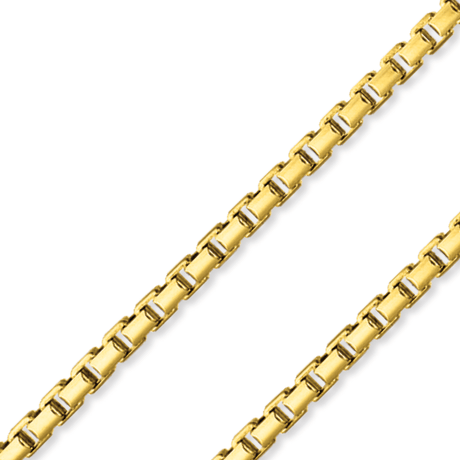
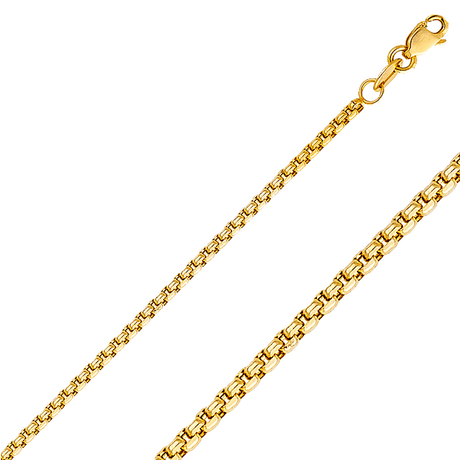
Box chains — square-profile links connected in a smooth, uniform line — are popular for their clean, minimalist appearance and excellent strength-to-weight ratio. A 1mm box chain is one of the most durable fine chains available at that gauge. Figaro chains, with their alternating long-and-short link pattern, bring classic Italian elegance to women's jewelry and are particularly popular as pendant chains. Cuban link chains in women's widths (3–5mm) have grown substantially in popularity for women, driven by fashion trends that embrace bolder, more substantial gold jewelry.

Herringbone chains — flat, arrow-patterned chains that drape fluidly against the skin — are popular with women for their distinctive visual character and their ability to lie flat against the collarbone. Snake chains, with their smooth cylindrical tube construction, are popular for a different reason — their smooth, modern surface reads very differently from linked-chain styles. Layered chain looks — wearing 2–4 chains of different styles and lengths simultaneously — are among the most popular women's jewelry trends, making the chain collection itself a styling tool rather than just a pendant vehicle.

What is a women's Cuban link chain?

A women's Cuban link chain is a gold necklace constructed from flat, interlocking oval links with beveled edges — the same link pattern as men's Cuban chains, scaled to women's proportions. Women's Cuban link chains are typically 2–5mm wide (versus 4–12mm+ for men's) and 16–20 inches long. At these widths, the Cuban link pattern is recognizable and bold without the physical weight and neck presence of men's Cuban chains. A 3mm Cuban link at 18 inches reads as a deliberate jewelry statement while remaining delicate enough for everyday wear.

Women's Cuban link chains in yellow gold have become one of the defining jewelry trends of the 2020s, crossing from hip-hop-influenced fashion into mainstream fine jewelry. The style was previously associated primarily with men's jewelry; its adoption in women's sizes reflects a broader trend toward gender-fluid, bold-statement jewelry in women's fashion. Women's Cuban link chains are available in 14K and 10K yellow gold, white gold, and two-tone variations. Diamond-cut versions add faceted sparkle to the link surface, increasing visual impact at finer gauges.

Styling women's Cuban link chains: a 2–3mm Cuban link at 16–18 inches is understated enough for professional and formal contexts while remaining recognizable as a Cuban link. A 4–5mm Cuban link at 18–20 inches is a bold statement piece that reads clearly as fashion-forward women's jewelry. Women's Cuban link chains can be worn alone as a statement chain, layered with finer chains (a 1.5mm cable and a 2.5mm rope alongside a 4mm Cuban link creates a rich layered look), or used as pendant chains for larger pendants that benefit from a substantial visible chain.

What is a women's rope chain?

A women's rope chain is a gold necklace constructed from multiple wire strands twisted and looped together in a continuous spiral pattern. This twisted construction creates a textured, dimensional surface that catches and reflects light from many angles, giving rope chains significantly more visual sparkle than cable or box chains of similar width. Women's rope chains in fine gauges (1.5–2.5mm) are among the most popular everyday gold chains — they are visually rich without being heavy, and their sparkle is visible even at close ranges in indoor lighting.

Women's rope chains come in two surface treatments: standard and diamond-cut. Standard rope chains have the natural twisted surface created by the wire looping process — warm, textured, and continuously sparkling. Diamond-cut rope chains have additional flat facets cut into the twist ridges by diamond-tipped tools, creating sharper, more intense light-catching points. Diamond-cut rope chains at women's gauges (1.5–2mm) produce notably more visual impact per gram than their standard counterparts — they appear to have more presence than their fine gauge would suggest.

Women's rope chain sizing guide: a 1.5mm rope chain at 16–18 inches is the classic delicate everyday rope — subtle, sparkly, and appropriate for any context. A 2mm rope at 18–20 inches reads as a clear style statement while remaining fine jewelry in scale. A 3–4mm diamond-cut rope at 20 inches is a substantial necklace that commands visual attention. Rope chains at women's widths are excellent pendant chains — the twisted surface adds texture that frames and complements pendants. A diamond-cut rope in 14K yellow gold is one of the most versatile and widely flattering women's jewelry purchases.

What is a women's figaro chain?

A women's figaro chain is a gold necklace with a distinctive alternating link pattern — typically one long, oval or rectangular link followed by two or three shorter, round links, creating a rhythmic long-short sequence along the chain's length. The figaro pattern is one of the oldest Italian chain styles, dating to traditional Florentine goldsmith techniques. In women's widths (1.5–4mm), figaro chains present the alternating links as a refined visual accent — the elongated links catch light while the shorter links create a quiet background rhythm.

Women's figaro chains are particularly valued as pendant chains. The flat surface of the elongated links holds pendants securely positioned and maintains the pendant's orientation — religious medals, initials, birthstone pendants, and meaningful charm pendants all sit cleanly on figaro chains. The figaro pattern also scales well: at 1.5–2mm, figaro chains are fine and delicate; at 3–4mm, the elongated links become clearly visible and the chain can stand alone as a decorative statement without a pendant.

Figaro chains in women's fine jewelry are available in 10K and 14K yellow gold primarily, with some white gold options. Italian-manufactured figaro chains — identifiable by the three-mark clasp system (purity stamp, manufacturer code, Italian assay mark) — represent the highest construction quality in the commercial figaro chain market. A quality 14K figaro chain at 1.5mm and 18 inches in solid Italian construction is one of the most accessible and enduring fine gold jewelry purchases a woman can make — classic in style, durable in construction, and permanently valuable in gold content.

What length gold chain should women wear?

The standard and most popular women's gold chain lengths are 16 inches (sits at the collarbone), 18 inches (falls 1–2 inches below the collarbone), and 20 inches (reaches the upper chest/décolletage area). 18 inches is the most commonly purchased women's chain length — it falls at a universally flattering position on most women's necks, sits visibly above most necklines, and works well both with and without a pendant. 16 inches is the classic choker-adjacent length that sits precisely at the collarbone — particularly elegant with open necklines.

Chain length selection by context: for a pendant, the chain length determines where the pendant rests on the chest. A cross, initial, or birthstone pendant on a 16-inch chain rests at the collarbone — close to the face and easily visible. On an 18-inch chain, the pendant rests at the upper chest. On a 20-inch chain, it falls to the décolletage. Pendant size influences the best length — small, delicate pendants look most intentional at 16–18 inches; larger statement pendants have more visual space and impact at 18–20 inches. For pendant-free chains meant to be worn alone, 16 inches is the most elegant length for fine chains.

For layered looks, the standard women's layering progression uses 16, 18, and 20-inch chains — each two inches longer than the previous, creating clear visual separation between the three layers. A fourth layer can be added at 22–24 inches for a dramatic stacked look. Layering works best when chain styles are varied: a cable chain, a rope chain, and a Cuban link at different lengths create more visual interest than three identical chains of different lengths. For women with shorter necks or broader shoulders, longer chains (18–20 and 20–22 inches) tend to be more proportionally flattering.

About Women's Gold Jewelry

Women's Gold Jewelry: Building a Collection That Coordinates and Lasts

The foundation of a gold jewelry collection is metal consistency. Mixing 10K and 14K yellow gold in the same look creates visible color variation — 10K is paler, 14K is warmer — that reads as uncoordinated to anyone who looks closely. Starting with a chosen karat and staying within it creates cohesion across chains, bracelets, earrings, and pendants purchased at different times. 14K yellow gold is the standard choice for collection building: it's the most common karat for fine Italian gold jewelry, warm in color, widely available in all styles, and priced to allow quality pieces across multiple categories.

Layering logic applies across jewelry categories, not just necklaces. The current approach to women's gold jewelry is deliberately composed: chains at staggered lengths, a bracelet stack on one wrist, studs in one position and huggies in another. Each piece occupies a different zone of visual space without competing with the others. This approach works best when the pieces are scaled to each other — fine chains at the same width family, earrings that don't overwhelm the necklace stack, bracelets that don't compete with ring stacks on the same hand. Scale coordination is what makes a collection look curated rather than accumulated.

Gold jewelry has an investment dimension that fashion jewelry doesn't: the metal content has real, market-tracked value. A 14K gold chain bought today will still be 14K gold in twenty years — the gold value is not subject to trends or manufacturing obsolescence. Italian gold jewelry adds craft value to metal value: the construction quality means the piece itself holds up over decades, not just the material. Building a collection with these pieces means acquiring assets with both wear value (jewelry you use) and material value (gold you own). These are not competing purposes; they are the same purchase.

Compare /3

Loading...