Free shipping on all orders over $75 in the United States

When it comes to gold, we guarantee the use of 100% real gold in all our gold products.

FLASH SALE— Save 25%

HAPPY25NOW
Italian box gold chain

Box Gold Chain

Box Gold Chains — The Jeweler's First Choice for Pendant Wear.

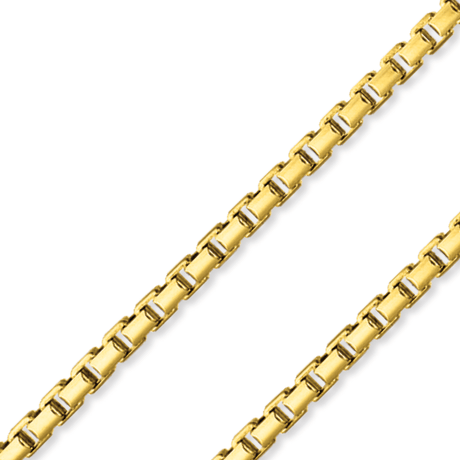
Box chains are built from square links connected at right angles — precise, geometric, and consistent. The construction is technically demanding: any deviation in link angle or dimension breaks the chain's characteristic clean appearance. A well-made box chain is an accurate indicator of manufacturing quality.

Why Box Chains Work with Pendants

The smooth, consistent surface means a pendant bail slides freely to center without catching. The flat-lying geometry ensures the pendant hangs straight. The pivot movement of the square links is uniform in all directions — the chain doesn't restrict or redirect pendant movement the way stiffer designs do.

Standalone Wear at Different Widths

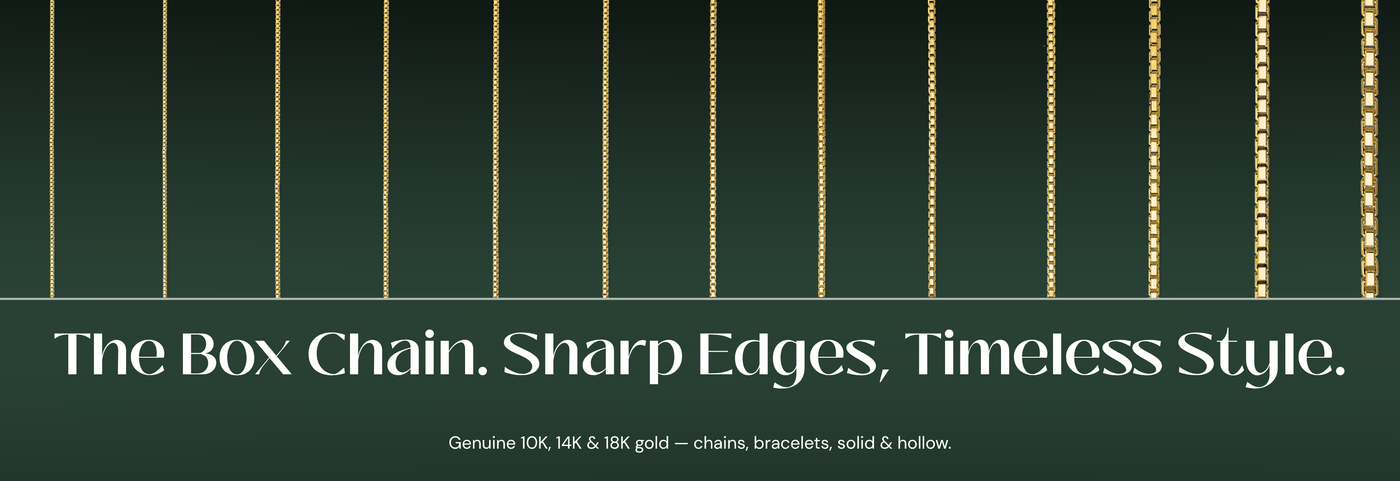
At 1–2mm, a box chain is nearly invisible — it's a pendant carrier. At 3–5mm, the chain becomes part of the look. The same clean, geometric quality that makes it a great pendant base makes it a strong standalone chain at medium widths.

View as

What is a box gold chain?

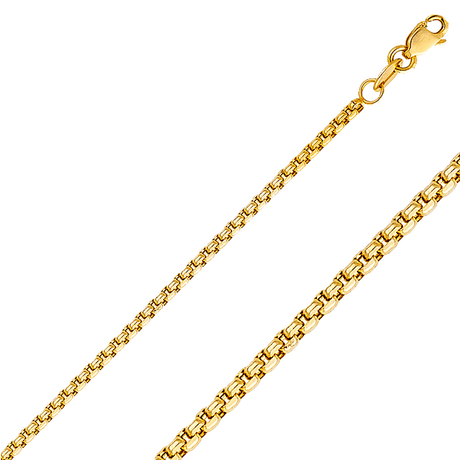
A box gold chain is a classic fine jewelry necklace made of square, cube-shaped gold links connected end-to-end in a uniform, repeating pattern that creates a smooth, geometric chain with clean, angular lines.

Each link in a box chain is a hollow or solid square tube — like a tiny box — with open ends that connect to the next link. The result is a chain with perfectly even spacing, a consistent square cross-section, and a flat, ribbon-like appearance that lies smoothly against the skin. Box chains are often described as the most geometric and architectural of all classic gold chain styles: they have a precision and uniformity that rope, Figaro, and Cuban chains do not share. The clean lines make box chains especially popular as pendant chains, where a simple, non-distracting chain lets the pendant be the visual focus.

Box gold chains are available in 10K, 14K, and 18K yellow, white, and rose gold, in widths ranging from delicate 1mm styles to bold 4mm versions. Their minimalist elegance makes them one of the most versatile and enduring chain designs in fine jewelry.

How is a box gold chain constructed?

A box gold chain is constructed by forming small square or rectangular tubes of gold and linking them end-to-end through interlocking openings, creating a uniform chain of cube-shaped links that connect in a tight, sequential pattern.

Each link is typically formed from a strip of gold sheet bent into a square tube shape and soldered closed. The links are then connected by passing each new link through the open end of the previous one before closing it — a process that can be done by machine at scale or by hand for premium pieces. The precision required to create uniform, flat-sided links with consistent dimensions throughout a chain's entire length is what distinguishes quality box chains from lower-grade versions. Well-made box chains have perfectly square links with no visible gaps, smooth solder seams, and a consistent gleam across every link face.

When evaluating a box chain, look for consistency: every link should be the same size, perfectly square, and lay in exactly the same plane as its neighbors. Inconsistent link sizes or links that rotate out of plane indicate lower manufacturing precision and will affect how the chain drapes and catches light.

What makes a box chain unique compared to other chain styles?

A box chain is unique for its perfectly square, geometric links that create a smooth, sleek surface with clean angular lines — giving it a modern, architectural look that is distinctly different from the rounded, twisted, or alternating patterns of other chain styles.

While rope chains sparkle with multi-directional brilliance and Cuban chains project bold weight, the box chain's appeal is in its restraint and precision. The flat faces of its square links reflect light in a consistent, mirror-like way rather than scattering it in all directions — the result is a steady, even gleam rather than a shimmering sparkle. This quality makes box chains particularly elegant in white gold or yellow gold at any karat: the geometric precision of the links reads as sophisticated and refined. The chain's uniform, rigid structure also gives it a distinctive drape — stiffer than a rope chain, it holds its form rather than pooling softly.

Box chains are the jeweler's top recommendation as pendant chains precisely because of their neutrality: the clean, minimal surface doesn't compete with any pendant style. They complement everything from simple solitaire diamonds to ornate religious medallions, and their rigidity keeps pendants centered and forward-facing.

How does a box chain compare to a rope chain?

A box chain has flat, square links with a smooth, geometric surface and a steady even gleam. A rope chain has twisted, rounded links with a three-dimensional structure and multi-directional sparkle. Box chains are sleeker and more minimalist; rope chains are more brilliant and dimensional.

The key difference is how each chain interacts with light and how it sits on the body. The rope chain's helical structure catches light from all angles at once, creating a dynamic sparkle that changes as the wearer moves. The box chain's flat square faces reflect light evenly and consistently, giving a controlled, elegant shine rather than a glittering brilliance. Box chains also lie flatter against the skin due to their rigid square links; rope chains drape with a softer, more fluid movement because the helical structure flexes in all directions. For pendant use, box chains keep pendants more centered; rope chains allow more movement.

Choose a box chain for a clean, modern look or as a pendant chain where the chain itself should be secondary to what it carries. Choose a rope chain for maximum sparkle and visual presence as a standalone necklace. Both are classic fine jewelry chain styles with very different personalities.

How does a box chain compare to a Cuban link chain?

A box chain has delicate, square links with a sleek, minimal profile. A Cuban link chain has thick, interlocked oval links with a bold, heavy, ribbon-like surface. Box chains are refined and subtle; Cuban chains are powerful and statement-making.

The Cuban link's dense, angled oval links packed side-by-side create a chain with significant visual weight and mass — it commands attention. The box chain's uniform square links create a much more understated presence: even in wider widths (3mm to 4mm), a box chain reads as elegant and refined rather than bold. Cuban chains are typically far heavier per inch than box chains of comparable width because their solid, flat links pack more gold into less height. Box chains are generally lighter and more comfortable for all-day wear. The two styles serve completely different aesthetic purposes and are rarely direct substitutes for each other.

If you want a chain that makes a bold statement of its own, choose a Cuban. If you want a refined, minimal chain that works in professional and casual settings alike and serves equally well as a standalone piece or pendant chain, choose a box chain.

How does a box chain compare to a Figaro chain?

A box chain has uniform square links in a consistent repeating pattern. A Figaro chain has an alternating pattern of one long oval link and two or three shorter round links. Box chains are more geometric and minimal; Figaro chains are more visually dynamic with their distinctive Italian alternating rhythm.

Both chains lie relatively flat against the skin, but their visual characters are quite different. The Figaro's alternating long-short link pattern creates an eye-catching rhythm that draws attention — the variation in link size gives it personality and heritage (it's distinctly Italian in origin and character). The box chain's perfect uniformity is its strength: it's a disciplined, precise design with no variation, no rhythm, just clean repetition. Figaro chains in yellow gold have a warmth and elegance that box chains also achieve, but the Figaro's visual complexity means it's sometimes better as a standalone piece than as a pendant chain.

For pendants, the box chain is the more neutral choice. For a standalone chain without a pendant, the Figaro offers more visual interest. Both are timeless styles — the choice comes down to whether you prefer disciplined minimalism (box) or Italian rhythmic elegance (Figaro).

How does a box chain compare to a curb chain?

A box chain has square links with flat, clean faces. A curb chain has oval links twisted flat and interlocked in a uniform pattern. Box chains are more geometric and architectural; curb chains are more traditional and have a slightly rounded profile despite their flat appearance.

Curb chains are one of the oldest and most classic chain styles — their oval links, twisted to lie flat, create a chain with a continuous, ribbon-like surface that's similar in concept to the box chain but rounder in character. The box chain's square links give it sharper, more defined edges that catch light differently: box chain faces are flat mirrors; curb chain faces are slightly curved and rounded. Curb chains are generally more flexible than box chains because their oval links allow more angular movement. Both are excellent pendant chains, but the curb chain has a slightly softer, more traditional look while the box chain is more modern and geometric.

If you're drawn to the clean, flat-link look and are deciding between box and curb, consider your aesthetic preference: square precision (box) versus rounded tradition (curb). Both are available in the same range of karats, widths, and lengths, and both serve equally well as standalone pieces or pendant chains.

What metals are used in box gold chains?

Box gold chains are crafted from 10K, 14K, or 18K gold, combining pure gold with alloy metals including copper, silver, and sometimes zinc or palladium. The alloy blend determines the chain's color, hardness, and karat purity.

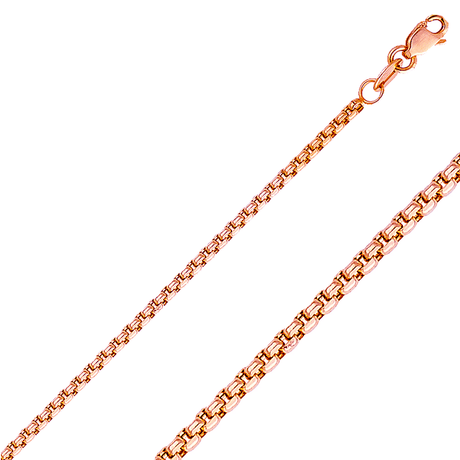
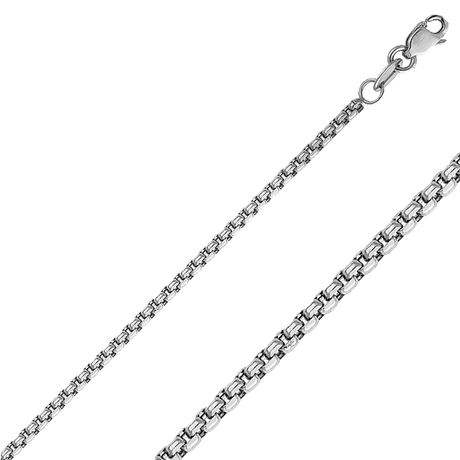
Pure 24K gold is too soft to hold the box chain's precise square link shape, so jewelers alloy it with harder metals. Yellow gold box chains use copper and silver alloys that enhance durability while preserving the warm gold color. White gold box chains substitute nickel, palladium, or zinc and are typically finished with rhodium plating for a bright, silvery-white surface — the box chain's flat square faces make white gold especially striking, as the clean surfaces reflect the rhodium's high polish brilliantly. Rose gold box chains use a copper-heavy alloy that gives the links a warm pinkish-gold tone that complements the chain's geometric precision.

White gold box chains are particularly popular because the chain's flat, mirror-like link faces showcase the bright rhodium finish beautifully. Yellow gold box chains have a classic, warm elegance. Rose gold box chains pair the romantic warmth of pink gold with the chain's clean geometric structure for a distinctive, modern look.

What karat options are available for box gold chains?

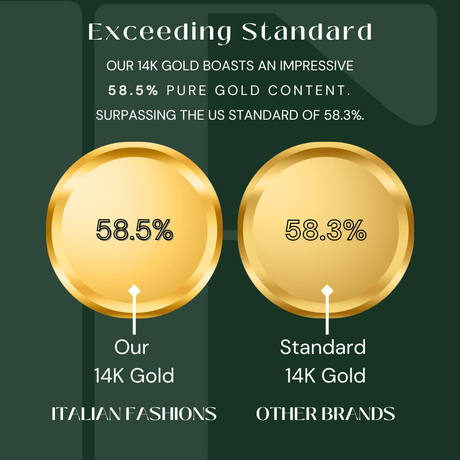
Box gold chains are available in 10K (41.7% pure gold), 14K (58.3% pure gold), and 18K (75% pure gold). Each karat offers a different balance of color richness, durability, and price per gram.

10K box chains are the most affordable and most durable — the higher alloy content makes the gold harder, which is especially valuable for a box chain whose square link structure requires dimensional stability to maintain its shape. 14K is the most widely purchased karat for box chains, offering a rich gold color, good durability, and meaningful gold value per gram. 18K box chains have the richest, most saturated color and highest gold purity but are softer and more expensive. The box chain's flat square faces make color differences between karats quite visible — 18K's deeper yellow reads clearly against 14K's slightly cooler tone.

For everyday wear, 10K or 14K is the practical choice. The box chain's link structure benefits from harder alloys because the square shape is more susceptible to denting than rounded links. For a special-occasion or investment piece, 18K maximizes gold content and color richness.

What is 10K gold and how does it affect a box chain?

10K gold contains 41.7% pure gold alloyed with 58.3% other metals, making it the hardest and most durable gold alloy for fine jewelry. 10K box chains are the most affordable real gold option and maintain the square link shape particularly well under daily wear.

The higher alloy content in 10K makes it harder and more scratch-resistant than 14K or 18K. For a box chain specifically, this hardness matters because the flat faces of the square links are vulnerable to surface scratching — harder 10K alloys resist these surface marks better than softer higher-karat alternatives. The link shape is also more dimensionally stable in 10K, meaning the square form resists denting or deforming under impact better than a softer 18K chain of the same construction. The tradeoff is a slightly paler, less saturated yellow color compared to higher karats, and potentially nickel content in some 10K alloys.

For buyers who prioritize durability and cost efficiency, 10K is an excellent choice for a box chain. The chain's precise square geometry benefits from the added hardness of 10K gold, and the price advantage per gram allows buyers to purchase more chain length or width for the same budget.

About Box Gold Chains

Precision Construction, Versatile Wear

Box chains are the most technically precise chain style to produce: each square link must be formed at exact right angles and connected to the next with perfect alignment. Any deviation in link angle or dimension breaks the chain's characteristic clean, flat appearance. This precision is why quality box chains are an accurate indicator of a manufacturer's technical capabilities — a well-made box chain is a demonstration of craftsmanship.

The practical benefit of box chain construction is its suitability for pendant wear. The chain's smooth, consistent surface means a pendant bail slides freely to center without catching. The flat-lying geometry ensures the pendant hangs straight. The pivot movement of the square links is uniform in all directions — the chain doesn't restrict or redirect pendant movement the way stiffer chain styles do.

At narrow widths (1–2mm), a box chain is almost invisible — it functions as a pendant carrier rather than a visual statement. At 3–5mm, the chain itself becomes part of the look. The same clean, geometric quality that makes it a great pendant base makes it a strong standalone chain at medium widths.

Compare /3

Loading...